Air fryers: Basket and oven styles tested.
Real cook times, even browning, and actual usable capacity.
We test basket and oven-style air fryers for how evenly they cook frozen fries, fresh chicken, and roasted vegetables. You will find recommendations based on daily meal prep rather than marketing claims about cooking speeds.
Each model undergoes a 30-day kitchen cycle where we measure preheat times to target temperatures using calibrated probes. We also verify advertised capacity against actual usable cooking area to highlight units that exaggerate their size.
What air fryer answer do you need?
The decisions that shape an air fryer purchase
After running 48 models through weeks of kitchen prep, these are the layout and performance choices that matter most before you check out.
Basket or oven-style: which setup actually fits your cooking?
Basket models excel at quick meals and shaking ingredients like fries or wings. They take up less counter space but limit you to a single vertical cooking zone. Oven-style models look like traditional countertop ovens and include multiple racks. They let you cook a main dish and a side simultaneously but demand more counter depth and take longer to preheat.
If you cook for one or two people, a basket model handles the job perfectly. Families cooking full meals usually need the extra width an oven format provides. Cleaning also varies; basket drawers wash easily in the sink, while oven-style models require wiping down an interior chamber.
- Basket format restricts cooking to a single vertical layer
- Oven format handles simultaneous dishes but requires more counter space
- Basket models preheat slightly faster than large oven chambers
Single basket or dual-zone: do you need the split?
Dual-zone air fryers let you cook two different foods at different temperatures and sync the finish times. This sounds great on paper but comes with a distinct tradeoff. A split 8-quart unit gives you two narrow 4-quart zones. You cannot fit a whole chicken or a standard baking dish in either side. Single-basket models offer maximum flexibility for wider items.
If your primary goal is cooking a protein and a vegetable side without mixing them, dual-zone models work well. If you frequently roast whole poultry or bake in small pans, buy a large single-basket model. Some premium units offer a removable divider to solve this issue entirely.
- Split zones reduce the maximum width of items you can fit
- Syncing functions simplify timing two completely different foods
- Removable dividers offer the best of both configurations
Does higher wattage mean faster cooking?
Manufacturers use high wattage numbers to promise faster meal times. Our testing shows wattage alone does not guarantee a quick preheat or a crispy finish. A 1500-watt model with excellent fan circulation and a well-insulated cooking chamber will outperform an 1800-watt model that leaks heat.
We measure the actual time it takes the internal chamber to reach 400 degrees Fahrenheit. Many high-wattage units struggle to maintain their set temperature when loaded with cold frozen food. The balance between fan speed and heating element placement dictates real cooking speed far more than the wattage printed on the box.
- Insulation quality dictates how well heat stays inside the chamber
- Fan speed and placement impact crisping more than wattage
- High wattage units still experience temp drops when fully loaded
What spec sheets hide about daily air frying
Evaluating an air fryer requires looking past the box claims. The appliance aisle is packed with models promising to replace every other tool in your kitchen. We run these units through 30 days of daily use to see which specs actually impact your dinner and which are just marketing noise.
Advertised capacity versus usable cooking area
Box labels boast about 6-quart or 10-quart capacities. Quarts measure volume, which means very little when you are laying out chicken wings in a single layer. We measure the actual flat surface area of the cooking basket or rack. A 5-quart model with a wide, shallow basket holds more food properly than a 6-quart model with a narrow, deep basket. Stacking food leads to soggy results. When you review our air fryer comparisons , you will see rankings based on usable square inches rather than total internal volume.
Temperature accuracy and preheat reality
Many models claim to hit 400 degrees in seconds. We place calibrated thermal probes inside the chamber to verify these claims. Some units beep to indicate they are ready while the internal temperature is still 40 degrees below the target. Others overshoot the target entirely, burning the outside of your food before the inside cooks. We flag models with significant temperature swings in our air fryer buying guides so you avoid units that require constant babysitting.
The truth about dishwasher safety and non-stick coatings
The manual might say the basket is dishwasher safe. We wash every model by hand and by machine to track coating durability. Harsh dishwasher detergents degrade non-stick finishes rapidly. By week three of our testing cycle, models with lower-quality coatings begin showing visible wear and flaking if run through a daily dishwasher cycle. Our maintenance guides detail which baskets truly hold up to machine washing and which require hand washing to survive the year.
Top guides & recent updates
How to Get the Most Out of Your Air Fryer This Summer
Spring Air Frying Strategies for Fresh Produce and Cooler Kitchens

Best Instant Pot – Top 8 Models Tested & Reviewed
Best Instant Pot – Top 8 Models Tested & Reviewednn n All products bought at retailn No press samplesn 8 products testedn Prices verified recentlyn nn The $140 Instant Pot Duo Plus boils two cups of water and reaches its 11.6 psi maximum pressure three minutes faster than the base models. You don’t need 15 […]

Best Air Fryers – Top 8 Models Tested & Reviewed
Best Air Fryers – Top 8 Models Tested & Reviewednn n All products bought at retailn No press samplesn 8 products testedn Prices verified recentlyn nn A 1500-watt heating element paired with a 2,500 RPM convection fan is what separates a true air fryer from a standard countertop oven. That concentrated, high-velocity airflow pulls moisture […]

Best Air Fryer for a Family of 4 – Top 8 Picks for 2026
n n All products bought at retailn No press samplesn 8 products testedn Prices verified March 2026n nnnn When you are feeding four people, the math of weeknight dinners changes entirely. A tiny 3-quart air fryer that works beautifully in a dorm room will leave a family staring at cold plates while waiting on a […]
Buying Guide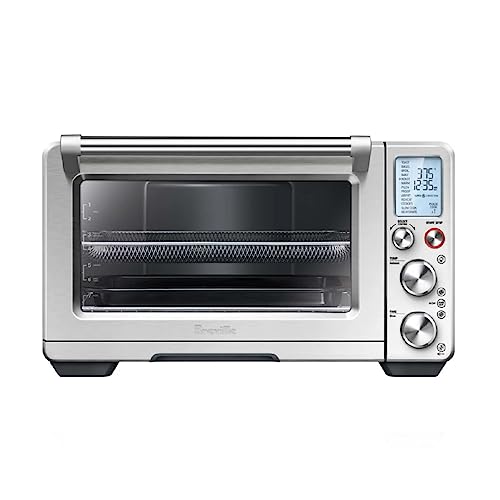
Best Toaster Oven Air Fryer Combos: 8 Top Picks
Looking for the best toaster oven air fryer combo? We tested 8 top models by roasting chickens and baking pizzas to find the best all-in-one appliance.
Buying GuideAir fryer questions we answer frequently
Straight answers based on real kitchen testing, thermal probe readings, and daily meal prep.
Complementary kitchen appliances
If you are upgrading your countertop cooking setup, these tools handle the tasks an air fryer cannot.
Air fryers, blenders, toaster ovens, coffee makers, and multi-cookers tested for real-home performance.
The weekly lab report.
No fluff. No ads.
Every Thursday: our latest test results, seasonal buying guides, and price-drop alerts on top-rated gear. Free forever.
No spam. Unsubscribe anytime. We never sell your data.