Air Purifiers.
Tested for actual particle reduction.
HEPA and carbon filter air purifiers tested for real-world particle reduction, noise output, and long-term operating costs. We log PM2.5 and VOC clearance in actual rooms instead of laboratory chambers so you know what works before allergy season hits.
Units are evaluated using calibrated air quality monitors to measure PM2.5 and PM10 reduction at 30-minute intervals across three distinct room sizes. Filter replacement cost is tracked to calculate the true expense of ownership over a five-year lifespan.
What do you need your air purifier to do?
The air purifier questions buyers get stuck on
After measuring particle drops across 45 units, these are the decisions that separate a capable room filter from a loud plastic fan.
True HEPA vs. HEPA-type: does the label actually matter?
Yes. True HEPA guarantees 99.97% removal of 0.3-micron particles. The label “HEPA-type” is a marketing term with no standardized testing requirement and is often found on cheaper machines. We only recommend True HEPA units for allergy sufferers because the performance gap registers immediately on our particle counters. A HEPA-type filter lets thousands of microscopic allergens pass right through the exhaust.
Ionizers and UV light features frequently appear on units with lower-tier physical filters to boost their perceived value. Physical filtration from a True HEPA barrier is what reliably captures airborne dust, pollen, and pet dander. The extra electronic features do not substitute for a high-quality physical filter medium.
- True HEPA is a regulated standard capturing 99.97% of tiny particles
- HEPA-type lacks testing requirements and leaves allergens circulating
- Electronic additions do not replace the need for physical filtration
How much CADR do you need for your room size?
Clean Air Delivery Rate determines how fast a unit cycles the air in a specific space. A machine rated for 150 square feet running in a 400 square foot living room never catches up to normal dust accumulation. The numbers on the box assume the unit is running at its absolute loudest fan speed, which few people tolerate continuously.
We recommend sizing up your CADR requirements by at least 20 percent over the manufacturer claim. This allows you to run the machine on a quieter medium speed while still turning over the room’s air four times an hour. Matching the exact square footage on the box forces the unit to operate at maximum decibels to hit its targets.
- Box claims require the highest, loudest fan setting to achieve
- An undersized unit operates constantly without lowering particle counts
- Sizing up by 20 percent allows for quiet operation and proper air cycling
Why does filter replacement cost matter as much as the upfront price?
The upfront price is only half your budget. A $100 purifier that requires an $80 replacement filter twice a year costs more over 36 months than a $250 unit with a $40 annual filter. Many brands sell entry-level machines below cost specifically to lock you into their proprietary replacement ecosystem.
We track the annualized filter cost for every unit we evaluate. Some filters handle a full year of operation before restricting airflow, while others load up in 90 days. We flag any machine where the five-year ownership cost drastically outpaces its initial sticker price.
- Initial purchase price ignores ongoing maintenance expenses
- Cheap hardware often pairs with highly expensive proprietary filters
- True cost of ownership emerges around the three-year mark
What separates a capable air purifier from an overpriced fan
Retail packaging focuses on square footage claims and clinical-sounding buzzwords. Our testing ignores the marketing copy and measures verifiable airflow, actual particle drops, and the reality of living with the machine day to day. We track what the machine does in an active living room, not an empty testing chamber.
The noise versus performance reality
Every unit lists its maximum CADR prominently, but that figure only exists at the absolute highest fan speed. In our real-world tests, most high speeds register between 55 and 65 decibels, which is too loud for sleeping, reading, or watching television. We log noise output at every setting using calibrated meters. In our air purifier buying guides , we prioritize machines that deliver significant particle clearance at their medium, tolerable fan speeds, completely sidestepping units that only perform when screaming at max volume.
Why carbon mass dictates odor control
If you need a purifier for smoke, cooking smells, or volatile organic compounds, the thin black sponge filter included with budget models saturates and stops working within a few weeks. True odor neutralization requires a pelletized carbon filter with actual weight. We measure VOC clearance times in our model comparisons , and machines with less than a pound of activated carbon consistently fail to maintain odor reduction past the 30-day mark. The physics of odor trapping require substantial carbon mass, and we check the scale.
Placement impacts performance as much as power
Shoving a high-powered purifier into a tight corner behind a sofa throttles its intake capacity and chokes the exhaust. A unit needs at least 18 inches of clearance on all intake sides to cycle room air properly. Wall-hugging designs look great in lifestyle photos but often struggle with circulation in practice. Our maintenance and usage guides map out the exact placement strategies that maximize a machine’s CADR rating without disrupting your room layout.
Top guides & recent updates
Summer Air Purifier Guide: Beating Wildfire Smoke and Pollen
Preparing Your Air Purifier for Spring Allergens and Early Smoke

Best Humidifiers – Top 7 Picks, Tested & Reviewed
n n All products bought at retailn No press samplesn 7 products testedn Prices verified March 2026n nnnn Winter air doesn’t just feel cold; it acts like a sponge, pulling moisture directly out of your skin, your sinuses, and your hardwood floors. When the humidity in your house plummets below 30 percent, you wake up […]

Best Air Purifiers for Smoke – Our Top 8 Picks for 2026
Searching for the best air purifier for smoke? We tested 8 top models against wildfire and tobacco smoke to find which units truly clear the air.
Buying Guide
Best Small Air Purifiers – Top 7 Models Tested in 2026
Searching for the best small air purifiers? We tested 8 models with real smoke to find the top performers for bedrooms, desks, and small spaces.
Buying Guide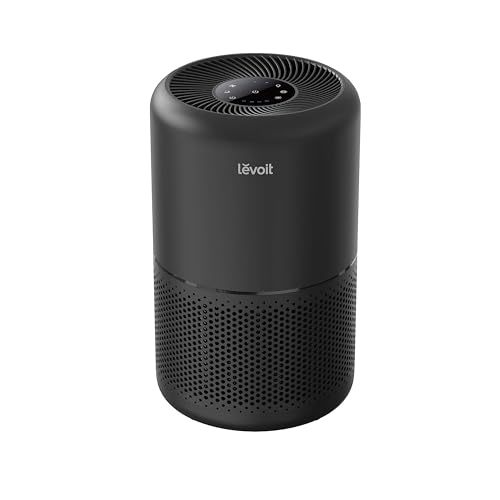
Best Air Purifiers for Pet Odor – Top 7 Picks for 2026
Tired of stubborn pet smells? We tested 8 top models against wet dogs and litter boxes to find the best air purifier for pet odor in 2026.
Buying GuideAir purifier questions we get asked most
Answers based on sustained particle testing and airflow tracking, not product manuals.
Explore other home scent categories
Products that tackle the air in your home from different angles.
Air purifiers, diffusers, plug-ins, odor eliminators, and room sprays evaluated for safety and household comfort.
The weekly lab report.
No fluff. No ads.
Every Thursday: our latest test results, seasonal buying guides, and price-drop alerts on top-rated gear. Free forever.
No spam. Unsubscribe anytime. We never sell your data.