You’re looking at your floors and thinking there has to be a better way. Enter the robot vacuum, that sleek little disc promising a future of automated, foot-friendly floors. But is it really going to solve your cleaning woes, or is it just another expensive gadget you’ll have to babysit?
Let’s be direct: a robot vacuum is not a one-to-one replacement for your upright vacuum. Thinking it is leads to disappointment. Getting it wrong means spending $500 on a device that gets tangled in a phone charger on day one and bombards you with more error notifications than clean floors. Getting it right, however, means your floors are perpetually free of crumbs, dust, and pet hair with almost no daily effort on your part.
The real question isn’t just ‘are they worth it,’ but ‘are they worth it for *me*?’ The answer depends entirely on your home, your habits, and your expectations. We’ll break down exactly what these robots do well, where they fail, and the real-world maintenance they require.
They’re Assistants, Not Maids: The 5-Minute Daily ‘Floor Prep’
The biggest myth about robot vacuums is that you just press a button and walk away. The reality is that they require a little prep work to do their job effectively. Before you run your robot, you need to do a quick scan of the floor, which usually takes less than five minutes but is absolutely critical.
This means picking up stray socks, dog toys, charging cables, and anything else small enough to be ingested or large enough to become an obstacle. The most common failure case is the vacuum eating a USB cable and dragging your lamp off the end table, or getting ‘high-centered’ on a shoe and beeping pathetically until its battery dies. A clear path allows it to complete a full 90-minute cleaning cycle uninterrupted; a cluttered one means you’ll come home to a half-clean room and a robot stuck three feet from its dock.
Surface Sweeping vs. Deep Cleaning: Know the Difference
Robot vacuums are champions of daily maintenance. They excel at picking up the surface-level debris that makes floors feel gritty: dust, crumbs, pet hair, and tracked-in dirt. For this task, they are phenomenal. You’ll notice a massive difference, especially on hard floors.
However, they lack the raw power of a traditional vacuum. A good robot may have suction of 2,500-5,000 Pascals (Pa), while a standard plug-in upright can easily top 15,000 Pa. This means a robot will keep your low-pile carpet looking neat, but it won’t pull the deep-down dirt from a high-pile or shag rug. The trade-off is frequency. You might go from needing to ‘deep clean’ with your upright every week to only once every 3-4 weeks.
From ‘Dumb Bumper’ to LiDAR Genius: Why Navigation Matters Most
The single biggest factor separating a useful tool from a frustrating toy is navigation. Cheaper, older models use a random ‘bump-and-turn’ method. They wander around until they hit something, turn, and wander in a new direction. This is inefficient and maddening to watch.
A ‘dumb’ robot might take 90 minutes to clean a room, missing 15% of the floor while re-cleaning other spots five times. A modern robot with LiDAR (laser) or vSLAM (camera) navigation is a major upgrade. It maps your home, cleans in methodical, straight lines, and can finish the same room in 45 minutes with 98% coverage. This mapping also unlocks essential features like ‘no-go zones’ you can draw in the app to protect the dog’s water bowl or that antique rug with tassels.
The Real Cost of Upkeep: Filters, Brushes, and Bins
While they save you from the chore of vacuuming, they introduce a new set of maintenance tasks. This isn’t a deal-breaker, but you need to be aware of the recurring time cost. First is the dustbin. Unless you splurge on a self-emptying model, you’ll need to empty the tiny onboard bin after every single run, a 30-second task.
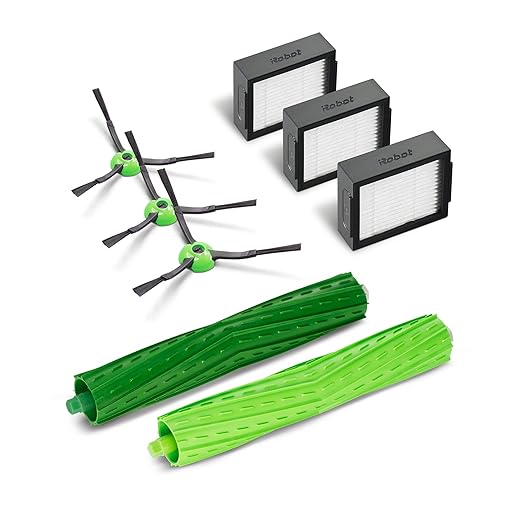
Second, the roller brush. Hair and string will get wrapped around it, choking its performance. Plan to spend about 5-10 minutes every 2-4 weeks with a pair of scissors or a cutting tool to free it. If you have long-haired pets or family members, this might be a weekly task. Finally, the filter needs to be tapped clean weekly and replaced entirely every 2-3 months. A clogged filter kills suction, so skipping this will quickly degrade your vacuum’s performance.
iRobot 4757966 Plastic Replenishment Kit
- Run the vacuum while you’re out of the house or overnight. The constant noise, around 60-70 decibels (like a loud conversation), can be surprisingly disruptive.
- For the very first run, follow the robot. Watch where it struggles. This is the fastest way to identify problem areas you can solve by setting a ‘no-go zone’ or moving a piece of furniture one inch.
- Check the height. Before you buy, measure the clearance under your sofa, kitchen cabinets, and dressers. It’s a huge letdown when your new 3.8-inch tall robot can’t fit under your 3.5-inch couch.
- Be cautious with very dark floors or rugs. The ‘cliff sensors’ that prevent the robot from falling down stairs can mistake a black rug for a ledge, causing the vacuum to avoid it entirely.
- If you have mostly hard floors, a combo vacuum/mop model is worth considering. The mopping is a light wipe-down, not a deep scrub, but it’s fantastic for keeping dust at bay.
Frequently Asked Questions
Conclusion
A robot vacuum is absolutely worth the investment if you reframe its job description. It is not a magical deep cleaner. It is a relentless ‘floor maintainer’ that tackles the daily grind of dust, crumbs, and pet hair so you don’t have to. It’s for the person who hates the gritty feeling of dirty floors under their feet and is willing to do a five-minute ‘floor prep’ to achieve a perpetually clean surface. The one thing to remember is this: Your decision shouldn’t be based on brand names or fancy features, but on an honest assessment of your home’s layout and your own tolerance for maintenance. Choose the navigation technology that fits your floor plan, and you’ll have a cleaning assistant that genuinely makes your life easier.


