You are pushing down on a ripe tomato and the skin buckles. Tomato juice bleeds all over your wooden cutting board. A dull knife makes prep work slow and dangerous because you have to press harder to force the heavy blade through food. You end up slipping and slicing your finger instead of the onion.
Sharpening your own knives removes the friction from cooking. You do not need a professional sharpening service or an expensive electric machine to get a factory edge. A simple whetstone and the right angle will bring a dead blade back to life. You just need a bit of patience and some muscle memory.
The process takes about fifteen minutes per knife once you get the hang of the motions. You will learn how to soak your stones, find the exact angle for Western or Japanese blades, and check your work with a sheet of paper. A sharp knife glides through a thick sweet potato with barely any pressure. Grab your dullest kitchen knife and your whetstone.
Choosing the Right Whetstone Grit for Your Blade
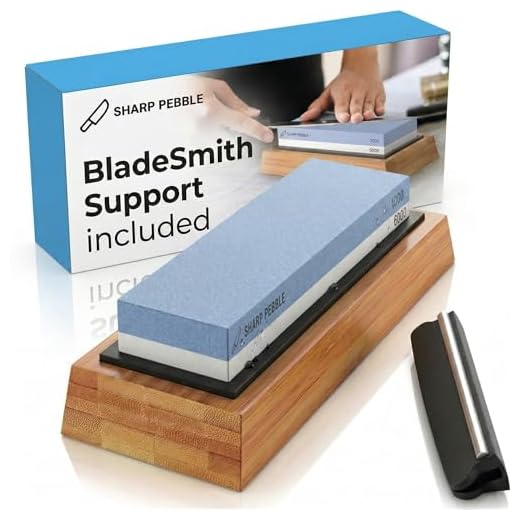
Whetstones come in different grit numbers just like sandpaper. A heavily damaged blade with visible chips needs a coarse grit between 400 and 800 to grind away metal quickly. Standard sharpening for a dull but undamaged knife requires a medium grit stone around 1000. This 1000-grit level does the heavy lifting to reshape the actual cutting edge. You will spend most of your time on this specific stone.
Finer stones between 3000 and 6000 grit polish the metal and remove tiny scratches. This polishing step refines the edge into a razor-sharp finish that glides through delicate items like raw fish or ripe fruit. You do not need to buy ten different stones. A double-sided stone with 1000 grit on one side and 6000 grit on the other covers almost every kitchen sharpening task perfectly.
Preparing the Stone with a Ten-Minute Water Soak
Most synthetic whetstones need a thorough water bath before you drag a steel blade across them. Drop your stone into a plastic container filled with cold tap water. You will see small bubbles rising to the surface immediately. Keep the stone fully submerged for ten to fifteen minutes until those bubbles stop appearing. The water acts as a lubricant to float away tiny metal shavings.
Skipping this soak means the metal dust will clog the pores of your stone and ruin the abrasive surface. Splash a few extra drops of water onto the stone while you work if it starts to look dry. Some high-end ceramic splash-and-go stones do not require a full soak. You just spray those with a fine mist of water and start working right away. Read the box your stone came in to verify the type.
Locking in the Perfect Twenty-Degree Angle
The hardest part of sharpening is keeping the blade at a consistent angle against the stone. Western-style chef knives usually require a 20-degree angle. Japanese knives have thinner blades and perform best at a steeper 15-degree angle. You can find a 20-degree angle easily by holding the knife perfectly straight up and down at 90 degrees. Tilt it exactly halfway down to hit 45 degrees. Tilt it halfway again to reach 22.5 degrees and drop it just a tiny fraction more.
A simple matchbook offers a great physical guide for a 15-degree angle. Slide a standard matchbook under the spine of the knife while the cutting edge touches the stone. Keep your wrist locked in this position. Consistency matters much more than hitting the exact mathematical degree. Your edge will come out sharp as long as you hold that same angle steady on every single pass.
Pushing the Blade Across the Coarse Stone
Place your whetstone on a damp dish towel so it stays firmly planted on your countertop. Grip the handle of the knife with your dominant hand and place the fingers of your opposite hand flat against the side of the blade near the tip. Start with the heel of the knife at the bottom corner of the stone. Push the blade forward and slide it diagonally across the stone so you end up at the tip of the knife.
Apply moderate downward pressure as you push the blade away from you. Release the pressure entirely as you pull the knife back to the starting position. Dragging the blade backward under pressure can damage the delicate edge you are trying to build. Repeat this sweeping motion ten to fifteen times on the first side. You will start to hear a steady scratching sound that tells you the metal is wearing away evenly.
Checking for the Burr on the Opposite Side
You must feel for a burr to know when it is time to flip the knife over. A burr is a microscopic lip of metal that folds over to the opposite side of the blade as you grind away the edge. Drag your thumb gently down the flat side of the blade moving away from the sharp edge. Do not slide your finger along the sharp edge itself or you will cut yourself.
You will feel a tiny scratchy ridge catching on your skin. This ridge proves you have ground the edge down far enough on the first side. Keep working on the first side for another five minutes if the metal still feels completely smooth. Move on to sharpening the second side of the blade only after you can feel a consistent burr running from the heel all the way up to the tip.
Flipping the Knife and Matching Your Strokes
Turn the knife over to sharpen the second side once you establish a solid burr. You have to switch your grip and pull the blade toward you to maintain the correct angle if you keep the knife in your dominant hand. Start with the tip of the knife at the top of the stone. Pull the knife backward and across the stone while applying downward pressure.
Count your strokes on this side so they match the effort you put into the first side. This keeps the cutting edge perfectly centered. Feel for the burr again after ten or fifteen strokes. The burr will have flipped back over to the original side. You have successfully established a new edge on both sides once you feel that scratchy lip return.
Polishing the Edge on the Fine Grit Surface
Flip your whetstone over to the finer 3000 or 6000 grit side to polish the blade. Repeat the exact same sweeping motions using much lighter pressure. The coarse stone does the grinding. The fine stone simply smooths out the microscopic teeth left behind by the lower grit. Five to eight passes on each side will remove the burr completely and leave a mirror finish on the metal.
Wash your knife with warm soapy water to remove all the residual metal dust and stone grit. Dry the blade thoroughly with a clean cotton towel. Grab a standard sheet of printer paper and hold it up by one corner. Slice downward through the edge of the paper. A properly sharpened knife will shear through the paper silently without tearing or snagging on the fibers.
Quick Tips
- Keep a permanent marker handy and color the very edge of your blade black. The stone will grind the ink away exactly where the metal makes contact so you can visibly check your sharpening angle.
- Flatten your whetstone with a diamond flattening plate after every five sharpening sessions. Whetstones develop a hollowed-out curve in the middle over time which makes it impossible to hold a straight angle.
- Tape the spine of a nice carbon steel knife with blue painter’s tape before sharpening. This prevents accidental scratches on the flat side of the blade if your hand slips while dragging it across the stone.
- Strop your finished knife on an old leather belt for two minutes to align the final microscopic burr. Hang the belt from a cabinet knob and drag the blade backward exactly like a barber strops a straight razor.
- Store your dry whetstones in a breathable cardboard box instead of a sealed plastic bin. Trapped moisture inside plastic containers causes mold to grow on the porous stone surface.
Frequently Asked Questions
Learning to sharpen a knife by hand saves you money and turns a frustrating kitchen chore into a fast task. Your first few attempts will feel clumsy while your hands learn the muscle memory required to hold a steady 20-degree angle. Start practicing on a cheap paring knife before you grind down your favorite expensive chef’s blade.
Grab your dullest knife and soak your 1000-grit whetstone right now. Find your angle, push the blade away from you with steady pressure, and keep going until you feel that scratchy burr on the opposite side. You will slice through tomorrow morning’s tomatoes without spilling a single drop of juice.
Recommended Products