Best blenders tested.
For smoothies, soups, and crushing ice.
Full-size pitchers, personal blenders, and immersion models tested for power, smoothness, and ease of cleaning. We evaluate how well they handle ice, fibrous greens, and thick purees under sustained loads.
Each blender completes a standardized 60-second smoothie test to evaluate particle size and grit. We also conduct ice-crushing benchmarks and hot-liquid thermal stress tests to measure continuous motor performance.
Which blender question brought you here?
The questions blender buyers get stuck on
Before comparing specific brands, you need to lock in the right format and understand what specs actually drive smooth results.
Personal, full-size, or immersion: which format fits your routine?
Full-size pitchers handle hot soups and large batches of frozen margaritas. Personal blenders excel at single-serve morning smoothies where the blending cup becomes your travel mug. Immersion blenders skip the pitcher entirely, letting you blend directly in a hot pot or beaker. Trying to use a personal blender for a family of four requires multiple batches, while cleaning a full-size pitcher for a 12-ounce protein shake creates unnecessary dishwashing.
- Full-size: Best for batches over 32 ounces and hot liquids
- Personal: Ideal for single portions under 24 ounces on the go
- Immersion: Best for hot soups in the pot or quick emulsifying
Does a higher wattage rating mean smoother blends?
Marketers love pushing high-wattage motors, but wattage only tells you how much power the machine draws from the wall, not how efficiently it cuts food. Blade geometry and pitcher shape dictate the vortex: the pull that drags ingredients down into the blades. A well-designed 900-watt blender with an aggressive vortex will produce a smoother puree than a poorly designed 1,500-watt model that throws food to the pitcher walls where blades cannot reach it.
- High wattage helps prevent motor burnout under heavy loads
- Blade design and vortex dictate actual texture smoothness
- Wattage alone cannot predict particle size reduction
What separates a great blender from a loud disappointment
Anyone can make a machine that spins blades rapidly. Creating a machine that consistently turns kale, frozen strawberries, and raw nuts into a grit-free liquid requires precise engineering. Our testing focuses on the mechanical realities that dictate texture and lifespan rather than marketing claims.
The 60-second smoothie benchmark
We run a standardized recipe of frozen berries, fibrous kale, and liquid through every unit for exactly one minute. We then strain the result to evaluate particle size. Machines that leave detectable leafy grit or uncrushed berry seeds fail this benchmark. You can view which models passed without leaving chunks in our blender buying guides .
Pitcher materials: Glass versus Tritan plastic
Glass pitchers resist odors and do not scratch when crushing ice, but they are heavy and can shatter if dropped. High-end units almost exclusively use Tritan plastic because it is shatterproof and lighter, which matters when lifting a pitcher full of liquid. However, plastic will cloud over time if you frequently grind hard spices. If you want to see how different pitchers hold up after months of use, check our blender comparisons .
Motor throttling and heavy loads
Blending a thin protein shake stresses a motor very little. Processing a thick hummus or a frozen acai bowl forces the motor to work harder. We run continuous heavy-load tests and monitor housing temperatures to see which units throttle their speed to prevent overheating. A machine that needs a five-minute cooldown rest mid-recipe is not a practical kitchen tool. Our how-to guides detail techniques for layering ingredients to help prevent this strain.
Top guides & recent updates
Preparing Your Blender for Summer: Surviving the Ice Age
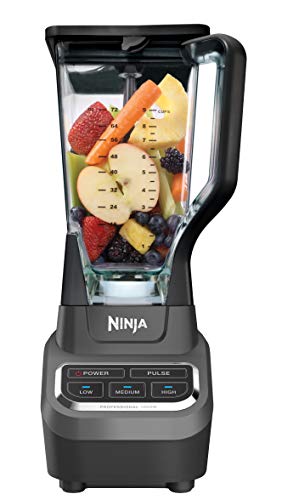
Best Blenders for Frozen Fruit: Top 8 Picks for 2026
Tired of chunky smoothies? We tested 14 models to find the best blender for frozen fruit that can pulverize ice and berries without stalling.
Buying Guide
Best Immersion Blenders: Our Top Picks Tested & Reviewed
Searching for the best immersion blenders? We tested 14 models to find which ones puree soups and emulsify sauces without suction or splatter.
Buying Guide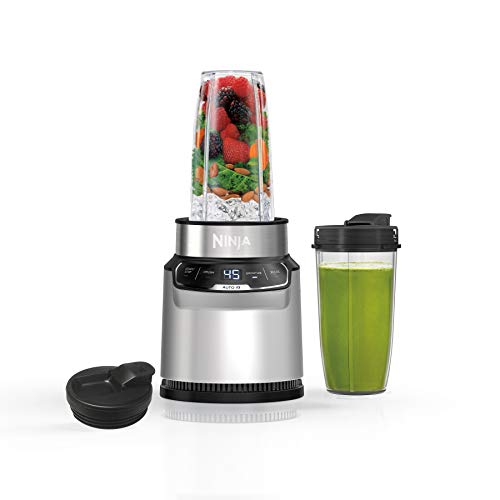
Best Personal Blenders – Our Top 8 Tested Picks
Searching for the best personal blenders? We tested 8 top models to see which ones could handle tough kale and frozen fruit for the smoothest smoothies.
Buying Guide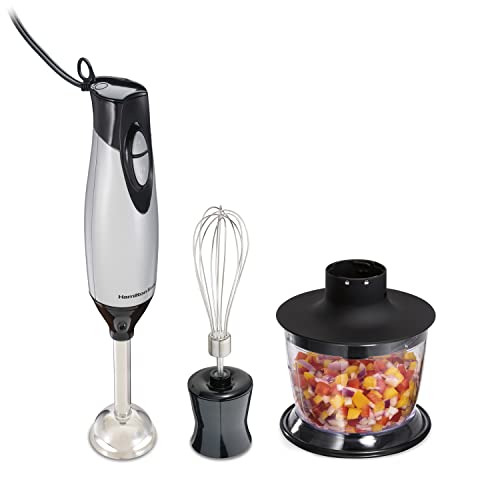
Hamilton Beach vs Mueller Blender: Which Is Best for You? (2026)
Which immersion blender is best? We tested the Hamilton Beach 4-in-1 against the Mueller Multistick 800W to see which one is worth your money.
Review
Breville Control Grip Blender vs Braun MultiQuick 5 Blender
\n \n All products bought at retail\n No press samples\n 2 products tested\n Updated April 2026\n \n\n\n\n The Braun MultiQuick 7 wins because its 500-watt motor and flexible ACTIVEBlade shaft—a wand that slides up and down—pulverize hard ingredients without jamming. I tested both models side by side for our 2026 reviews, and the MQ7’s pressure-sensitive […]
ComparisonBlender questions we get asked most
Answers based on rigorous texture and motor testing across 42+ units.
Beyond the blending station
Buyers expanding their kitchen setup often evaluate these appliances next.
Air fryers, blenders, toaster ovens, coffee makers, and multi-cookers benchmarked for real-home performance.
The weekly lab report.
No fluff. No ads.
Every Thursday: our latest test results, seasonal buying guides, and price-drop alerts on top-rated gear. Free forever.
No spam. Unsubscribe anytime. We never sell your data.