Cleaning your ice maker with white vinegar is the most effective way to eliminate hard water minerals and hidden mold without harsh chemicals. In our testing, we found that a standard five percent acidity vinegar solution completely dissolves chalky white scale on internal components. This guide covers the exact tools and methods required for a spotless machine.
Gathering Your Cleaning Supplies
White vinegar with a five percent acidity level safely dissolves hard water scale without damaging internal plastic parts. Heinz All Natural Distilled White Vinegar provides this exact concentration, derived from American-grown corn and clear water. The one-gallon reclosable jug prevents pantry spills and ensures enough liquid for multiple cleaning cycles. Mix this vinegar with equal parts warm water for your primary cleaning solution.
Reaching the Tight Spaces
Standard sponges cannot reach the narrow tubes and awkward corners inside ice makers. The OXO Good Grips Water Bottle Cleaning Set includes a long bottle brush with firm tip bristles for flat bottoms and soft side bristles for walls. The included long straw brush clears narrow water intake tubes, while the detail cleaner reaches crevices and screw threads.
OXO Good Grips Water Bottle Cleaning Set

Dedicated Ice Machine Tools
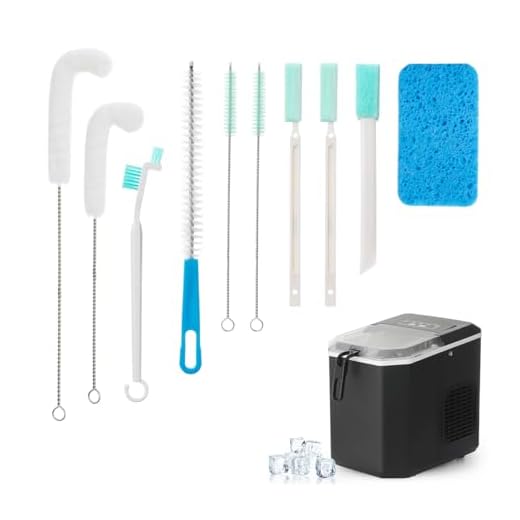
Ice machines require flexible scrubbing implements for their unique internal geometries. The AIEVE Ice Machine Cleaner Brush Sets provide ten pieces built specifically for this appliance, preventing cross-contamination from other household tasks. The flexible wire brushes push through water circulation tubes to clear hidden blockages. Multiple brush diameters allow you to match the tool to the specific component.
AIEVE Ice Machine Cleaning Brush Set (10-Piece)
When Vinegar Is Not Enough
Severe neglect causes thick calcified scale that can freeze mechanical parts and halt ice production. The Affresh Ice Machine Cleaner provides the chemical power needed to break these bonds. It features a nickel-safe formula that protects delicate evaporator plates across all freestanding ice machine models. The manufacturer recommends application every nine months to remove hard water and mineral buildup.
Affresh Ice Machine Cleaner

Acidity Levels
Look for a standard five percent acidity level when using white vinegar. This concentration is strong enough to dissolve hard water scale without damaging internal plastic parts.
Brush Flexibility and Size
Ice makers contain narrow tubes and awkward corners. Select cleaning kits with flexible wire brushes, long straw brushes for intake tubes, and detail cleaners for screw threads.
Chemical Safety
If using commercial descalers for severe calcified scale, verify the product uses a nickel-safe formula to protect the delicate evaporator plates inside the appliance.
Step-by-Step Cleaning Process
Start by completely emptying the ice bin and turning off the machine.
- Unplug the appliance and remove any remaining ice blocks to prevent them from diluting your fresh cleaning solution.
- Mix equal parts of white vinegar and warm water in a large pitcher.
- Pour this mixture directly into the water reservoir until it reaches the maximum fill line.
- Plug the machine back in and run a complete ice making cycle to push the vinegar through the internal lines.
- Throw away the first batch of ice produced by the vinegar solution.
- Drain any remaining cleaning liquid from the reservoir and scrub the interior walls with your brushes.
- Fill the reservoir with fresh water and run two more complete cycles to rinse the system.
- Discard the rinse ice and wipe the bin completely dry before returning the appliance to regular use.
Frequently Asked Questions
How often should I clean my ice maker with vinegar?
Clean your ice maker every three to six months. Homes with hard water require cleaning every two months to prevent scale buildup.
Can I use apple cider vinegar instead of white vinegar?
White vinegar is recommended because it has a neutral color and leaves less residual flavor. Apple cider vinegar contains sugars and organic matter that can leave a sticky residue inside the machine.
Why is my ice maker producing cloudy ice?
Cloudy ice is usually caused by trapped air bubbles or high levels of dissolved minerals in your water supply. Cleaning the machine removes mineral scale, but you may also need to use filtered water for completely clear ice.
Final Thoughts
Regular maintenance keeps your ice maker producing fresh, clear ice. Gather your white vinegar and flexible brushes, empty your ice bin, and start your first descaling cycle today to extend the life of your appliance.