Mushy rice happens when starch granules absorb too much water, swell past their capacity, and rupture. You can salvage the batch if you act before the grains turn into a complete paste. Spreading the overcooked grains on a rimmed baking sheet to evaporate the excess moisture is your best immediate defense.
You need a fine-mesh strainer and a low-heat oven to pull this off. Drying out waterlogged rice takes about five to ten minutes. You will also learn how to adjust your water ratios and rinsing habits to prevent sticky clumps from ruining your next dinner.
Understanding Why Rice Becomes Mushy
Excess water is the primary reason your rice turns into a soggy paste. Grains act like tiny sponges during the cooking process. They keep absorbing liquid until their cellular structure collapses completely. This structural failure releases amylopectin, a highly soluble starch that acts like glue, binding the individual grains into a solid block.
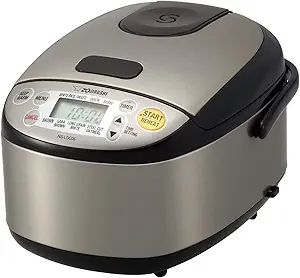
Temperature fluctuations also cause uneven water absorption. High-end cookers like the Zojirushi NS-ZCC10 Neuro Fuzzy use microchips to regulate heat and prevent this exact issue, adjusting the simmer based on thermal sensors. Stovetop cooking requires much more precision. You must measure your water accurately and control your burner output to avoid a sticky mess. Different rice varieties require different hydration levels to maintain their distinct texture. Short-grain sushi rice needs less water than long-grain basmati, and failing to account for these differences guarantees a mushy result.
Draining and Drying the Rice
Your first step is removing the standing liquid immediately. Pour the entire pot of mushy rice into a fine-mesh strainer to drain the excess water. Shake the strainer vigorously to dislodge moisture trapped between the clumps.
Next, spread the drained grains in a single, thin layer across a wide, unlined aluminum baking sheet. This maximizes surface area so the trapped moisture can evaporate quickly. Do not use parchment paper or silicone mats, as they insulate the rice and slow down evaporation. Place the sheet in a low oven set to 300°F for five to eight minutes to speed up the drying process. Check the texture at the five-minute mark by pressing a grain between your fingers. It should feel tacky but no longer wet. A heavy-bottomed pot like the Cuisinart Multiclad Pro Saucepan also works for a quick stovetop reheat if you lack oven space, though the baking sheet method yields much more consistent results.
Re-cooking for Better Texture
You can actively cook off the remaining moisture if air drying fails. Transfer the damp rice back into a wide skillet or pot over low heat. The sauté function on an Instant Pot Duo works well for this step, as does a wide cast-iron skillet.
Stir the grains gently but continuously with a silicone spatula to prevent them from burning against the hot metal. Avoid using a wooden spoon, which can crush the fragile, overcooked grains into a paste. You will notice the texture firming up within three to four minutes as the steam escapes. This quick evaporation technique saves the batch without turning the grains into hard pellets. If the rice is severely overcooked, add a tablespoon of neutral oil and a splash of soy sauce to pivot the dish entirely. Frying the mushy grains transforms the excess starch into a crispy crust, turning a failed side dish into a functional base for fried rice.
Preventing Mushy Rice in the Future
Rinsing your dry rice under cold water removes the surface starch that causes clumping. You should wash the grains in a bowl, swirling them with your fingers, until the water runs completely clear. This usually takes three to four changes of water.
A strict one-to-one ratio of water to rice works best for short-grain white varieties, while long-grain basmati requires a 1:1.25 ratio when cooked in a sealed environment. You can avoid measuring errors entirely by using an automated machine like the Zojirushi NS-ZCC10, which features internal water measurement lines calibrated for specific grain types. Stovetop cooks should rely on a heavy saucepan like the Cuisinart Multiclad Pro to maintain a steady simmer. Thin pots create hot spots that boil water too quickly, leaving the rice undercooked on top and mushy on the bottom. Keep the lid tightly closed to trap the necessary steam, and never lift it during the active cooking phase.
🎯 Key Takeaways
Fixing mushy rice requires immediate intervention to stop the cooking process. You must drain the excess water and spread the grains flat to evaporate the trapped moisture. Reheating the batch on low heat will firm up the texture if air drying is not enough. You can prevent soggy results entirely by rinsing your grains thoroughly and measuring your water with strict precision. Upgrading to a dedicated cooker or a heavy-bottomed pot provides the consistent heat necessary for fluffy results.
Recommended Products
These tools help prevent and fix overcooked rice.
Zojirushi NS-ZCC10 Neuro Fuzzy Rice Cooker
This machine uses a microcomputer to adjust cooking temperatures and times based on thermal feedback. If you accidentally add slightly too much water, the Neuro Fuzzy logic extends the boiling phase to evaporate the excess.
Pros:
- Automatically adjusts cooking time and temperature
- Non-stick inner pan prevents bottom burning
- Keep-warm function holds safe temperatures for 12 hours
- Dedicated settings for mixed, sweet, and brown rice
Cons:
- Takes up significant counter space
- Cooking cycles take longer than stovetop methods
Cuisinart MCP19-18N Multiclad Pro Saucepan
A heavy-bottomed pot is mandatory for stovetop rice. This 2-quart saucepan features a triple-ply construction with an aluminum core that distributes heat evenly across the base and up the sidewalls. This prevents the hot spots that cause uneven, mushy batches.
Pros:
- Triple-ply construction eliminates hot spots
- Tight-fitting stainless lid traps steam effectively
- Flared rim allows for drip-free pouring
- Oven safe up to 550°F
Cons:
- Heavier than standard aluminum pots
- Handle gets hot during extended simmering
OXO Good Grips 8-Inch Fine Mesh Strainer
Draining waterlogged rice requires a mesh fine enough to catch the grains but open enough to let viscous, starchy water escape. This 8-inch strainer handles a standard two-cup batch easily.
Pros:
- Double-rod construction prevents bending under heavy loads
- Fine stainless steel mesh catches small grains like quinoa
- Soft, non-slip handle provides a secure grip over the sink
- Resting loop hooks securely onto pot rims
Cons:
- Starch dries and sticks in the mesh if not washed immediately
- Takes up considerable space in a dishwasher
Frequently Asked Questions
Can I put mushy rice in the fridge to dry it out?
Yes. Spreading the rice on a plate and leaving it uncovered in the refrigerator for 12 to 24 hours draws out moisture. The cold air dehydrates the surface starches, making this an excellent prep step for fried rice.
Is it safe to eat mushy rice?
Mushy rice is completely safe to eat as long as it was cooked recently and held at safe temperatures. The texture is simply a result of over-hydration and ruptured starch granules, not spoilage.
Why is my brown rice mushy but still hard in the middle?
This happens when the water boils off too quickly before the tough bran layer softens. You used too high of a heat setting. The outside turns to mush while the core remains undercooked.
Can I turn mushy rice into congee or porridge?
Yes. The easiest way to salvage severely overcooked rice is to lean into the texture. Add three cups of chicken broth, ginger, and scallions, then simmer for 20 minutes to create a savory rice porridge.
Does rinsing rice prevent it from getting mushy?
Rinsing removes excess surface starch that causes grains to stick together, but it does not prevent mushiness caused by adding too much water. You still need to measure your liquid accurately.
Bottom Line
Immediate draining and low-heat evaporation save most overcooked batches for home cooks trying to salvage dinner. This method effectively removes surface moisture, though the grains will never regain their original firm bite. Grab a fine-mesh strainer and start draining.