Ice makers: Tested for Speed & Quality
Nugget, clear, and bullet ice.
Countertop and portable ice makers tested for daily production rate, ice quality, and ease of cleaning. We evaluate nugget, clear, and bullet models to find which units keep up with high demand without harboring mold.
Each machine is timed from start to first ice drop and monitored over 12 hours to measure actual daily yield against manufacturer claims. We score ice consistency, melt rate, and the difficulty of the descaling process across multiple wash cycles.
Which ice maker question brought you here?
Ice maker decisions that matter most
After testing machines across all three major formats, these are the choices that determine whether an ice maker fits your daily routine or becomes a countertop nuisance.
Nugget, clear, or bullet: which ice type justifies the cost?
Bullet ice makers freeze water around metal pegs, producing hollow ice quickly and cheaply. These models dominate the $100 to $150 range, dropping ice within 8 minutes. The tradeoff is rapid melting in your drink. Clear ice machines run water over a freezing plate in layers, creating dense restaurant-quality cubes that melt slowly. They sit in the $150 to $250 tier and take 15 minutes per cycle. Nugget ice machines scrape frozen flakes and compress them into soft chewable pieces. This complex auger mechanism pushes prices into the $350 to $600 range and requires the most maintenance.
If you just need ice fast for a party cooler, a bullet model wins. If you mix cocktails or sip fine whiskey, the slow melt rate of clear ice justifies its price. If you specifically crave the soft crunch of “Sonic ice” and are prepared to descale the machine monthly, the premium cost of a nugget maker delivers exactly what you want.
- Bullet ice is fast and inexpensive but waters down drinks quickly
- Clear ice melts slowest, making it ideal for cocktails and spirits
- Nugget ice requires expensive complex parts and strict cleaning routines
How much ice do countertop models actually produce in a day?
The “26 pounds per day” claim printed on the box assumes you empty the basket the absolute second it fills, continuing this pattern for 24 hours straight without interruption. Nobody operates a machine this way. Countertop ice makers act like insulated coolers, not freezers. Once the bin fills, an infrared sensor tells the machine to stop producing. As ice melts, the water drips back into the reservoir and freezes again.
We test actual usable yield by running machines for a standard 12-hour waking period and emptying the basket at normal intervals. A machine rated for 26 pounds typically yields 8 to 10 pounds of usable ice in real conditions. The size of the internal basket dictates how much ice is ready when you need it far more than the theoretical daily maximum does.
- Machines stop producing once the internal sensor detects a full bin
- Countertop models are not freezers; ice slowly melts back into the reservoir
- A 26-pound rating yields closer to 10 pounds of actual ice during a 12-hour day
Looking past the daily production spec
Evaluating an ice maker by its maximum daily output is like evaluating a car solely by its top speed. The numbers sound impressive on a spec sheet but ignore how you actually use the machine in your kitchen. Our testing focuses on cycle time, melt rate, and the physical burden of keeping the unit sanitary.
Nugget ice vs. clear ice: what you are actually buying
The price gap between ice formats reflects mechanical complexity rather than durability. A basic bullet ice maker uses a simple peg system, while a nugget ice maker relies on a heavy-duty auger to shave and compress ice continuously. You are paying for the mechanism to create that specific texture, not a longer lifespan. In our ice maker buying guides , we separate machines entirely by ice type, because someone looking for chewable pellet ice is shopping in a completely different mechanical category than someone wanting clear square cubes for cocktails.
Production claims vs. the reality of the ice bin
Manufacturers boast high output numbers by calculating ideal continuous production. During our testing, we measure the physical capacity of the holding bin and clock the time it takes to refill after being emptied. A machine with a larger bin and a slower cycle often serves a family better than a fast machine with a tiny basket that constantly hits its shut-off sensor. Our ice maker comparisons highlight these exact bin capacities and cycle recovery times, so you know exactly how much ice is waiting for you at dinnertime.
The hidden maintenance reality of countertop water appliances
Any appliance that holds standing water at room temperature will eventually grow mold or develop mineral scale. Ice makers require a strict cleaning schedule to remain safe. Some models feature accessible reservoirs and simple drain plugs. Others require awkward tipping or hide internal tubes behind fixed plastic grilles where sludge accumulates out of reach. We run every unit through a full descaling sequence, and our maintenance guides detail which machines make cleaning a five-minute task and which ones turn it into a frustrating afternoon chore.
Top guides & recent updates

Best Nugget Ice Makers: Our Top 8 Tested Picks for 2026
Craving chewable, flavor-absorbing sonic ice? We tested the top countertop nugget ice makers to find the fastest, quietest, and most reliable models.
Buying Guide
Frigidaire EFIC189 vs NewAir Ice Maker: Which to Buy in 2026
\n\n All products bought at retail\n No press samples\n 2 products tested\n Updated April 2026\n\n\n\n\nThe NewAir 50 lb Countertop Ice Maker wins this matchup because it doubles the daily ice production of the Frigidaire EFIC189 and includes a self-cleaning cycle. While the Frigidaire costs nearly $220 less, the NewAir handles heavy party usage without forcing […]
Comparison
Weiman Wipes vs OXO Ice Bucket: Which Is Better? (2026)
Which kitchen accessory offers more daily value? We put Weiman Stainless Steel Wipes against the OXO Steel Ice Bucket to see which is the better buy.
Comparison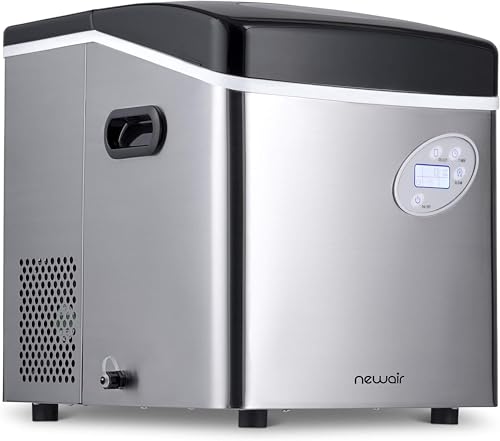
NewAir Countertop Ice Maker vs GE Profile Opal 2.0 XL
\n \n All products bought at retail\n No press samples\n 2 products tested\n Updated April 2026\n \n\n\n\n The GE Profile Opal 2.0 XL wins this comparison because its chewable nugget ice absorbs beverage flavors rather than just cooling them. While the NewAir produces 12 pounds more ice daily, the GE Opal’s attached water tank and […]
Comparison
Frigidaire EFIC189 vs hOmeLabs: Which Is Easier to Clean? (2026)
Which countertop ice maker is best? We tested the Frigidaire EFIC189 and the hOmeLabs ice maker side-by-side. One has a game-changing self-cleaning feature.
Comparison
Frigidaire EFIC189 Silver vs Igloo Automatic Ice Maker
\n \n All products bought at retail\n No press samples\n 2 products tested\n Updated April 2026\n \n\n\n\n The Igloo Handled Portable Ice Maker beats the Frigidaire EFIC189 because its built-in self-cleaning cycle prevents the mold buildup common in countertop machines. I tested both, and while the Frigidaire drops ice one minute faster, the Igloo’s carrying […]
ComparisonIce Maker questions we get asked most
Answers based on timing cycles, measuring ice density, and performing deep cleans across 24+ units.
Appliances that pair well with fresh ice
Machines that put your new ice supply to work immediately.
Air fryers, blenders, toaster ovens, coffee makers, rice cookers, and multi-cookers benchmarked for real-home performance.
The weekly lab report.
No fluff. No ads.
Every Thursday: our latest test results, seasonal buying guides, and price-drop alerts on top-rated gear. Free forever.
No spam. Unsubscribe anytime. We never sell your data.