Kitchen thermometers: Instant-Read & Probe Models Tested
Accuracy checked against certified reference units.
Instant-read and probe thermometers tested across raw meat, boiling water, and hot oil. We check response time, waterproofing, and readability so you know exactly what hits the target temperature before you buy.
Every thermometer is verified across three temperature ranges (135 to 165°F for meat, 250 to 310°F for candy, 325 to 375°F for oil) against a certified reference unit, with response time to a stable reading measured with a stopwatch.
How can we help you check temperatures?
The temperature decisions buyers get stuck on
After testing dozens of kitchen thermometers across hot grills and deep fryers, these are the decisions that separate a confident purchase from a frustrating tool.
Instant-read or leave-in probe: which format do you actually need?
Instant-read thermometers excel at quick spot-checks on the stovetop or grill. You insert the probe, get a reading within a few seconds, and remove it. Leave-in probes stay inside the roast or poultry while it cooks in the oven or smoker, monitoring the internal temperature continuously and alerting you when it reaches your target.
Most cooks benefit from owning an instant-read model first, as it covers everything from pan-seared chicken breasts to baked goods. A leave-in probe becomes necessary when you regularly roast large cuts of meat or smoke barbecue, situations where opening the door frequently ruins the cooking process.
- Instant-read models work best for active cooking and quick spot-checks.
- Leave-in probes track slow-cooking meats without opening the oven door.
- Many active kitchens eventually require both formats for different tasks.
How much speed and accuracy are you actually paying for?
A $15 thermometer and a $100 thermometer might both boast high accuracy, but the difference shows up in response time and build quality. Budget models often take eight to ten seconds to settle on a final number. Premium models reach a stable reading in under three seconds.
When you check multiple steaks over a hot grill, those extra seconds mean burning your hand or overcooking the food. Higher-priced units also feature robust waterproofing and auto-rotating displays that make them easier to read at awkward angles. We test exactly how fast each unit hits the target number so you know if the premium price translates to practical speed.
- Budget units often require eight seconds or more to stabilize.
- Premium thermometers deliver accurate readings in under three seconds.
- Higher prices usually bring better waterproofing and display features.
What separates reliable readouts from ruined meals
Manufacturer specifications focus heavily on fractional degree accuracy. While knowing a reading is within half a degree sounds impressive, real-world cooking rarely demands that level of precision. Our evaluation prioritizes the factors that actually affect your cooking experience: speed, durability, and readability.
Response time: the metric that dictates usability
A thermometer that takes ten seconds to register the correct temperature is useless when you check a thin chicken breast in a hot skillet. We measure the exact time it takes for each unit to hit a stable reading in boiling water and ice baths. If you want to know which models keep your hand out of the steam, check our kitchen thermometer rankings for verified speed test results.
Waterproofing and durability in a messy kitchen
Cooking is wet and messy. A thermometer that dies the first time it drops in the sink or gets rinsed too aggressively under the tap offers poor value. We check the IP waterproof ratings by submerging claimed models and logging whether condensation builds up inside the display. In our thermometer head-to-head comparisons , we highlight the units that survive repeated washings without display fogging.
Calibration features and long-term accuracy
Even the best sensors drift over time. Units that allow manual recalibration extend their lifespan significantly compared to sealed units that you must throw away once they lose accuracy. We test the calibration process using standard ice baths to see how easily you can reset the baseline. Our calibration and care guides explain how to check your specific model and keep it reading true year after year.
Top guides & recent updates

Best Meat Thermometers – Top 8 Accurate Models for 2026
Tired of dry chicken or overcooked steak? We tested dozens of digital models to find the best meat thermometers for speed, accuracy, and durability.
Buying Guide
Lavatools Javelin PRO Classic vs Alpha Grillers Meat Thermometer
\n\n All products bought at retail\n No press samples\n 2 products tested\n Updated April 2026\n\n\n\n\nThe Lavatools Javelin PRO Classic wins this comparison. While the Alpha Grillers thermometer costs under $15 and reads quickly, the Lavatools model secures the win through its motion-activated, auto-rotating display and strict ±0.5°F accuracy. You will never struggle to read the […]
Comparison
Thermapen ONE vs Javelin PRO: Which Is Faster for Grilling? (2026)
The ThermoWorks Thermapen ONE boasts one-second reads but costs over twice as much as the Lavatools Javelin PRO Classic. Which instant-read thermometer is best for you?
Comparison
Lavatools Javelin PRO vs Maverick PT-100BBQ: Which Is Better?
\n \n All products bought at retail\n No press samples\n 2 products tested\n Updated March 2026\n \n\n\n\n The Lavatools Javelin PRO Classic is the right choice for the vast majority of home cooks. It’s wicked fast, incredibly accurate, and costs half as much. You get top-tier performance for everything from grilling steaks to roasting a […]
Comparison
How to Test Thermometer Accuracy at Home
A miscalibrated thermometer ruins expensive cuts of meat and leaves you guessing about food safety. You need to verify your equipment regularly. You can easily check your thermometer’s accuracy using a simple ice water bath or boiling water. These methods cost nothing. They give you an immediate baseline for your tool’s performance. You can then […]
How-To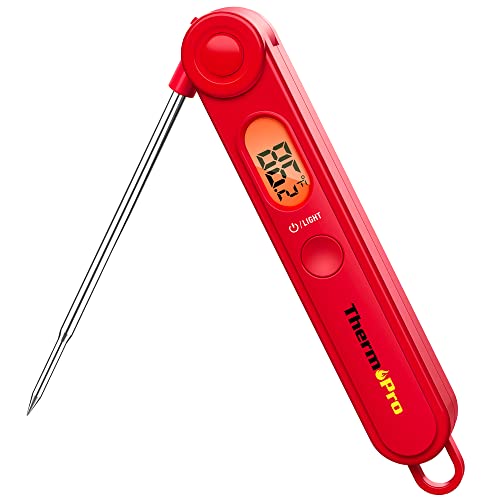
Mastering the Meat Thermometer: A Step-by-Step Guide
Guessing when meat is done leads to dry chicken and dangerous pork. You need a fast, accurate digital meat thermometer. It stops you from ruining expensive cuts of protein. A good thermometer removes the guesswork entirely. You stick the probe into the thickest part of the meat and read the number. Tested by HomeEssentialsLab Experts […]
How-ToKitchen thermometer questions we get asked most
Answers based on rigorous response testing and calibration checks, not just the numbers printed on the box.
Precision doesn’t stop at temperature
Buyers who value an accurate thermometer often upgrade these tools next.
Storage solutions, spice organization, prep tools, thermometers, and scales all tested for everyday reliability.
The weekly lab report.
No fluff. No ads.
Every Thursday: our latest test results, seasonal buying guides, and price-drop alerts on top-rated gear. Free forever.
No spam. Unsubscribe anytime. We never sell your data.