Kitchen Tools: Tested Scales, Thermometers & Prep Gear
60 days minimum. All products bought at retail.
Kitchen scales, thermometers, prep tools, spice organizers, and food storage containers. Each one tested in real kitchens for accuracy, durability, and what holds up past the first few months of daily use.
Our kitchen tool evaluations include calibration testing against certified reference weights and units, durability checks at 30, 60, and 90-day intervals, and real-world cooking trials across multiple households.
Start with what you’re trying to solve
The questions this hub was built to answer
Tested data on what kitchen tools actually cover, how precision is measured, and what separates products that hold up from ones that don’t.
What does a kitchen tool have to do to earn a recommendation here?
We set pass/fail thresholds before testing begins and don’t adjust them based on results. For kitchen scales, accuracy must hold to ±1g across five calibration reference weights on day one, then pass a second check at 60 days. Drift between those two readings is the strongest predictor of long-term reliability. For thermometers, any model that deviates more than ±0.9°F from a certified reference unit at two or more temperature ranges is excluded from top rankings, regardless of price. Food storage containers must pass 90 days of daily inversion tests and 60 days under 20lb stacking weight without lid warping or seal failure. Prep tool blade sharpness is tracked at 30, 90, and 180 prep sessions. Recommendations note exactly where edge retention splits between material grades.
How do you know if a kitchen scale or thermometer is actually accurate?
For thermometers, we take 200+ readings across three temperature categories — raw meat (135–165°F), candy and sugar work (250–310°F), and frying oil (325–375°F) — and compare each reading against a certified reference thermometer. Any model that drifts more than ±0.9°F from the reference across two or more ranges doesn’t qualify for our top rankings.
For scales, we verify accuracy at 1g, 100g, and 500g using certified calibration weights, then test tare reliability across 50 consecutive weighing cycles. We check calibration again at 60 days. Drift between the day-one and day-60 readings is the strongest predictor of whether a scale stays useful long-term.
Do better-quality kitchen tools and organizers actually last longer?
In most categories, yes — but not in the ways marketing suggests. The durability gaps emerge at the 60–90 day mark, not at first use. A $12 food storage set and a $35 set may both seal perfectly on day one. By day 90, the cheaper set often shows lid warping and seal softening that leads to leaks. We track this across 12 container sets per testing cycle using weekly inversion tests and 20lb stacking pressure over 60 days.
For prep tools, the split is less about price and more about material grade. Ceramic-coated stainless holds an edge longer than standard stainless. Bamboo cutting boards resist deep scoring better than soft plastic. We evaluate blade sharpness retention at 30, 90, and 180 prep sessions. That’s where the data on whether an upgrade spend is real actually comes from.
What separates a useful kitchen tool from one you’ll quietly replace
Most kitchen tool coverage is built around first impressions. The scale reads correctly out of the box. The thermometer hits the right number on the first probe. The container seals cleanly on the first fill. None of that tells you what happens at month two or three — which is when real quality gaps surface. Our thresholds exist for this reason: a scale must maintain ±1g accuracy through a 60-day drift check, a thermometer must hold within ±0.9°F across 200+ readings, a storage set must pass 90 days of daily inversion tests. These aren’t aspirational benchmarks — they’re the minimum to earn a recommendation here.
Scales and thermometers — accuracy that holds over time
For thermometers, we log 200+ readings across three temperature ranges — raw meat (135–165°F), candy work (250–310°F), and frying oil (325–375°F) — against a certified reference unit. Any model that drifts more than ±0.9°F at two or more ranges doesn’t qualify. Scales are verified at 1g, 100g, and 500g calibration weights on day one and again at 60 days. The drift between those two checks is the most reliable predictor of long-term reliability. Higher prices on thermometers genuinely buy faster response time; on scales, mid-range models often match premium accuracy through 60 days. Our thermometer buying guide and kitchen scale rankings break this down by use case and budget tier.
Prep tools — where material grade matters and where it doesn’t
Blade sharpness is scored at 30, 90, and 180 prep sessions. That’s where material differences become measurable rather than theoretical. Ceramic-coated stainless holds an edge longer than standard stainless under daily use. Bamboo cutting boards resist deep scoring better than soft plastic but warp faster with frequent moisture exposure. We track groove depth at 90 and 180 sessions on cutting boards; once grooves exceed roughly 2mm, cleaning effectiveness drops. Budget vs. premium matters less than material specification in this category. Our prep tool buying guide and how-to guides map this directly to price tiers and use case.
Storage and organization — seal quality holds or it doesn’t
Food storage containers go through 90 days of daily inversion tests. Developing seal failure shows up within the first few checks. We also stack sets under 20lbs of weight for 60 days to measure lid deformation over time. Containers that show warping or weakened seals before day 90 are excluded from rankings regardless of brand. For spice storage, we test capacity, label visibility, and stability across three setup types: drawer inserts, countertop turntables, and wall-mount strips. Each has different tradeoffs depending on kitchen size and layout. Our kitchen storage guide and spice organization picks include tested recommendations per setup type.
Browse kitchen tool types
Storage solutions, spice organization, prep tools, thermometers, scales, and reusable alternatives — each with their own rankings and guides. Pick your tool type, then choose your path.
Kitchen Storage
Food storage containers, pantry organizers, and drawer systems run through 90 days of daily inversion tests with water-filled containers. Any seal failure before day 30 disqualifies a product from a top-tier recommendation. Lids are cycled through 200+ open-and-close sequences to check locking mechanism wear, and a 20lb stacking weight is applied for 60 days to measure lid deformation in real pantry and refrigerator conditions.
Greenco Refrigerator Organizers 9.4/10Spice Organization
Spice racks, turntables, and drawer inserts are tested across three setup configurations — countertop turntables, drawer inserts, and wall-mount strips — using standardized 2oz and 4oz jar sets to verify capacity claims on packaging. Label visibility is scored under overhead and under-cabinet lighting, and stability is checked on flat countertops and in moving drawers to catch rattling and tip-prone designs.
Prep Tools
Cutting boards, mandolines, graters, and prep gadgets are put through blade sharpness checks at 30, 90, and 180 prep sessions using a standardized tomato and carrot slice test. Cutting board groove depth is measured at 90 and 180 sessions (replacement threshold: approximately 2mm), and mandoline guards are evaluated for finger clearance and whether they stay usable after the first week of regular work.
OXO Good Grips 9.2/10Kitchen Thermometers
Instant-read and probe thermometers are verified across 200+ readings in three temperature ranges — raw meat (135–165°F), candy (250–310°F), and frying oil (325–375°F) — against a certified reference unit, with a ±0.9°F pass/fail threshold applied at each range. Response time to first stable reading and waterproofing via submersion testing are logged for every unit, since accuracy that takes eight seconds to appear is a different problem than accuracy that fails in a wet environment.
ThermoPro TP20 9.2/10Kitchen Scales
Digital kitchen scales are verified for accuracy at 1g, 100g, and 500g using certified calibration weights on day one and again at 60 days, with calibration drift between those two checkpoints treated as the primary long-term reliability signal. The tare function is cycled through 50 consecutive weighing sequences to catch zero-return failures, which show up more often in lower-cost units than the platform durability problems most buyers watch for.
OXO Good Grips 8.9/10Top guides & recent updates
The Best Kitchen Storage for a Spring Pantry Reset
Spring Kitchen Reset: The Best Reusable Alternatives for Earth Day and Beyond
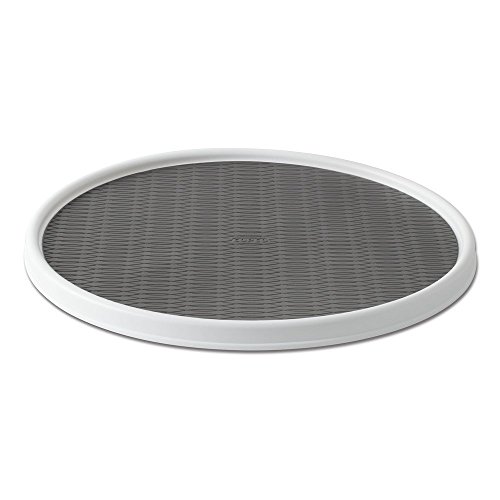
Best Lazy Susans for Cabinets – Top 8 Picks for 2026
Tired of fumbling in cluttered cabinets? We tested the top lazy susans for cabinets to find the smoothest, most durable options for your kitchen.
Buying Guide
Best Magnetic Knife Strips: Top 7 Kitchen Picks for 2026
Searching for the best magnetic knife strips? We tested 7 top models for holding strength, ease of installation, and material quality to find the best.
Buying Guide
Best Kitchen Scales – Our Top 8 Tested Picks for 2026
Tired of inaccurate measurements? We tested 7 popular kitchen scales for weeks to find the most precise and easy-to-read models for any budget.
Buying Guide
Best Refrigerator Organizer Bins – Top 7 Picks for 2026
Tired of a chaotic fridge? Mismatched containers waste space and cause cooling issues. We tested 32 refrigerator organizer bins to find the best sets.
Buying GuideKitchen Tool Questions, Answered
Questions we hear from buyers weighing options across scales, thermometers, prep tools, and storage — answered with tested data.
If you cook, these hubs are worth your time
Kitchen tools work alongside everything else in your kitchen. The appliances you use, the surfaces you clean, and the air quality you deal with all connect back to what we test here.