LifeStraw Personal Water Filter Review
It's a hollow plastic tube you suck water through, and yet it strips out 99.999999% of the bacteria that would otherwise put you on the trail's version of a bathroom emergency.
The LifeStraw has become the default answer to “what do I pack for backcountry water” because it needs no batteries, no pump handle, and no chemical drops that leave an aftertaste. It’s built for hikers who don’t want to carry a heavy filter system, for the bug-out bag that sits untouched for years until it’s needed, and for anyone who wants a $20 insurance policy against a bad water source.
- Lab-verified microfiltration The membrane removes 99.999999% of bacteria like E. coli and Salmonella, and 99.999% of parasites like Giardia and Cryptosporidium, per EPA/NSF/ASTM protocols.
- Rated for 4,000 liters One straw is good for roughly 1,000 gallons before the membrane is spent, which covers years of casual trail use or a long-term emergency stash.
- Also cuts microplastics and turbidity It filters particulate down to 1 micron and reduces turbidity to 0.2 microns, so cloudy stream water comes out visibly clearer, not just biologically safer.
- No power source, no moving parts It’s a straight suck-through design with zero batteries or pump mechanisms to fail, which is exactly why it ends up in bug out bags people don’t check for years.
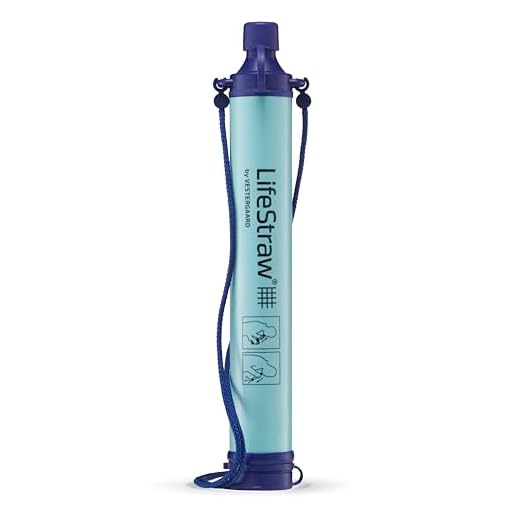
A 2-stage microfiltration membrane strips out 99.999999% of bacteria and 99.999% of parasites like Giardia straight from the source, filtering 4,000 liters before it needs replacing.
| Filter Type | Hollow-fiber microfiltration membrane |
| Bacteria Removal | 99.999999% (log 8) — E. coli, Salmonella |
| Parasite Removal | 99.999% (log 5) — Giardia, Cryptosporidium |
| Microplastic Filtration | Down to 1 micron |
| Turbidity Reduction | Down to 0.2 microns |
| Filter Lifespan | 4,000 liters (1,000 gallons) |
| Testing Standards | US EPA, NSF, ASTM protocols |
| Material | BPA-free plastic housing |
| Power Source | None required — direct-draw straw design |
| Virus Removal | Not rated — bacteria/parasite filter only |
- Filters straight from the source with no pumping, squeezing, or waiting for gravity
- 4,000-liter rated lifespan means it survives years of intermittent use without replacement
- No batteries or cartridges to lose, corrode, or forget to charge in a bug out bag
- Log 8 bacteria and log 5 parasite reduction backed by EPA/NSF/ASTM lab testing, not marketing copy
- Cuts turbidity to 0.2 microns, so silty creek water goes from muddy to clear as it comes through
- Each purchase funds a year of clean water for a school child, which is a nice tiebreaker over a no-name filter straw
- Doesn’t remove viruses, so it’s not a reliable choice for water sources in regions with viral contamination risk (some international travel, some contaminated municipal supplies)
- You have to put your face at the water source — no bottle, bag, or hose adapter included, which is awkward at a shallow puddle or muddy bank
- Suck-through resistance gets noticeably harder as the membrane loads with sediment, especially in silty water
- No chemical or heavy-metal removal, so it won’t help with agricultural runoff, industrial contamination, or salt water
Choosing the right outdoor wifi extender
-
Log reduction rating for bacteria and parasitesHighFilters are rated by how many orders of magnitude they reduce contaminants — look for lab-verified numbers, not vague claims.Look forIndependently tested log 6+ bacteria reduction and log 3+ parasite reduction, ideally against EPA/NSF/ASTM protocolsAvoidFilters that only list vague terms like "purifies water" without a tested percentage or reduction log
-
Virus protection (or lack of it)HighStraw-style microfilters typically can't remove viruses because they're smaller than bacteria and parasites, which matters for international travel or contaminated municipal water.Look forA separate purifier tablet or UV device if traveling somewhere with viral contamination riskAvoidAssuming any personal filter covers viruses unless the listing explicitly states it
-
Filter lifespan and replaceabilityMediumA filter rated for a few hundred liters will need replacing mid-season; one rated for thousands of liters can last years of casual use.Look forA stated liter or gallon capacity, and whether the filter is disposable or has a replaceable coreAvoidFilters with no published lifespan rating, since flow rate degrades as the membrane clogs
-
Draw resistance / flow rateMediumSome microfilters get noticeably harder to suck through as sediment builds up, which matters if you're filtering silty or turbid sources.Look forReviews that mention flow rate in cloudy or sediment-heavy water, not just clean tap testsAvoidFilters with no turbidity or particulate spec listed at all
-
Format: straw vs. bottle vs. pumpLowStraw filters are lightest and cheapest but require drinking directly at the source; bottle and pump systems let you carry filtered water for later.Look forA format that matches your actual use case — straw for backup/emergency, bottle or pump for primary trip hydrationAvoidBuying a straw filter as your only water solution for a multi-day trip with no other refill strategy
Common questions
Does the LifeStraw remove viruses?
No. It’s rated for bacteria (99.999999%) and parasites (99.999%), but viruses are small enough to pass through the microfiltration membrane. If you’re traveling somewhere with viral contamination risk, pair it with purification tablets or a UV treatment device.
How long does one LifeStraw actually last?
It’s rated for 4,000 liters, or about 1,000 gallons, before the membrane is spent. For an occasional hiker that can mean years of use; for daily heavy use in an emergency, plan on it wearing down faster as sediment builds up in the fibers.
Can I fill a bottle with it or does it only work as a straw?
The base unit is a direct-draw straw, so you put one end in the water source and drink through the other. It doesn’t come with a bottle or bag attachment, so filling a container to carry filtered water for later isn’t part of this specific product.
Is it safe for muddy or silty water?
It filters turbidity down to 0.2 microns and microplastics down to 1 micron, so it will clear up cloudy water. That said, heavily silted sources will clog the membrane faster and increase suck resistance, so pre-filtering through a cloth for really muddy water helps it last longer.
For the price and weight, the LifeStraw does exactly what it claims: it strips bacteria and parasites out of sketchy water with lab numbers to back it up, and it keeps working for a rated 1,000 gallons without any moving parts to fail. The catch is real — no virus protection and no bottle to carry filtered water for later — but as a backup filter or bug-out-bag staple, it’s hard to beat for the cost.
- Lab-verified removal of 99.999999% bacteria and 99.999% parasites under EPA/NSF/ASTM protocols
- 4,000-liter rated lifespan with zero batteries, pumps, or chemicals required
- Compact and cheap enough to justify keeping one in every pack, car kit, and bug out bag
If your water risk is mostly bacteria and parasites — trail streams, questionable well water, an emergency kit that might sit for years — the LifeStraw earns its spot in the pack. It’s not a full replacement for a pump or bottle filter on a multi-day trip where you need to carry water, but as a lightweight backup or emergency staple, it’s a smart, cheap buy.