Rice cookers: Tested Micom, Induction & Basic Models
Evaluated for texture, consistency, and keep-warm reliability.
We test basic thermal cookers alongside advanced Micom and induction heating models to evaluate moisture retention, heat distribution, and inner pot durability. A good rice cooker delivers perfectly separated grains on demand. A great one holds that exact texture for 12 hours after the cycle finishes.
We cook standardized batches of short-grain white, long-grain brown, and rinsed jasmine, measuring moisture retention and grain separation immediately after the cycle ends and again at the 12-hour keep-warm mark.
What rice cooker decision are you facing?
The questions that decide your rice cooker purchase
After running 35+ models through hundreds of batches, we isolated the choices that separate an everyday kitchen staple from a frustrating countertop paperweight.
Micom, induction, or basic: which heating tech do you actually need?
Basic on/off cookers use a thermal switch, resulting in crusty bottoms and uneven top layers. Micom (microcomputer) models adjust temperature during the soak, boil, and steam phases, delivering consistently separated grains. Induction heating (IH) adds a magnetic field to heat the entire inner pot evenly, excelling at brown rice and mixed grains where consistent low-end heat is required.
If you eat rice weekly and stick to standard white grains, a mid-range Micom cooker hits the sweet spot for value and texture. Induction models justify their premium price only if you frequently cook brown rice, GABA rice, or rely on 24-hour keep-warm functions where bottom-scorching ruins the batch.
- Micom tech adjusts cooking phases for consistent texture across batches
- Induction heating wraps the pot in heat, preventing bottom-scorching
- Basic thermal cookers are fast but prone to crusting and uneven moisture
How many cups do you actually need?
Rice cooker capacity is measured in uncooked cups, but the “cup” is typically a 180ml standard, not a US measuring cup. A 5.5-cup model yields about 11 bowls of cooked rice. Small 3-cup models struggle with heat distribution on tiny batches, often yielding wetter rice than their larger counterparts cooking the same volume.
A 5.5-cup machine is the standard recommendation even for two-person households. It provides enough headroom for proper steam circulation without boiling over and handles meal-prep batches easily. Only size up to a 10-cup model if you consistently feed a family of five or more.
- Rice cooker cups equal 180ml, yielding roughly two standard bowls cooked
- 5.5-cup models offer the best heat distribution for everyday 2-3 cup batches
- 3-cup models often trap excess moisture due to limited vertical steam space
Are high-end Japanese rice cookers worth the investment?
Brands like Zojirushi and Tiger command premium prices for two measurable reasons: inner pot durability and keep-warm longevity. A basic cooker dries out or yellows rice after four hours. Premium models use sealed lids and precise low-wattage pulsing to hold rice at food-safe temperatures for up to 24 hours without texture degradation.
The inner pots on these high-end units feature multi-layer construction and heavy-duty nonstick coatings that resist flaking for years. If you cook rice daily and leave it in the pot for subsequent meals, the investment pays off in zero wasted food. For occasional cooking, the difference in immediate taste is minimal compared to a $100 Micom alternative.
- Premium models hold moisture and prevent yellowing for 12-24 hours
- Multi-layer inner pots resist warping and coating degradation
- The primary upgrade is keep-warm quality, not just immediate cooking speed
Evaluating specs versus everyday usability
When evaluating a rice cooker, the spec sheet tells you the wattage and the capacity, but it misses the metrics that dictate your daily experience. We focus our testing on texture consistency across grain types, the durability of the nonstick cooking surface, and the machine’s ability to hold temperature without ruining the batch.
Induction heating and Micom logic: when the tech upgrades actually matter
A basic cooker boils water until it evaporates, then clicks off. This blunt approach works for white rice but fails on complex grains. Micom logic introduces soaking and resting phases, absorbing water evenly before the boil. Induction heating takes this further by turning the entire pot into the heat source, rather than just firing a bottom plate. We document the difference by weighing moisture loss and scoring grain separation in our rice cooker buying guides . If you eat brown rice, the induction upgrade prevents the hard, undercooked centers that plague cheaper machines.
The keep-warm test: separating premium builds from budget buys
Almost any cooker can make an acceptable batch of white rice if you eat it immediately. The true performance gap emerges four hours later. Budget models apply continuous low heat to the bottom plate, creating a hard, yellow crust while the top layer turns to mush. Premium units seal the steam vent and pulse heat through the walls. We measure moisture content and grain structure at 4, 12, and 24 hours in our rice cooker comparisons . A machine that ruins half the batch in keep-warm mode costs you more in wasted food than you saved on the purchase price.
Inner pot durability and replacement realities
The nonstick coating on the inner pot is the standard point of failure for this appliance. Once it scratches or flakes, rice sticks aggressively and the pot must be replaced. We evaluate pot thickness, weight, and coating type, running them through 50 wash cycles with standard kitchen sponges. In our maintenance guides , we highlight which brands sell replacement pots affordably and which force you to buy an entirely new machine when the coating eventually wears out.
Top guides & recent updates
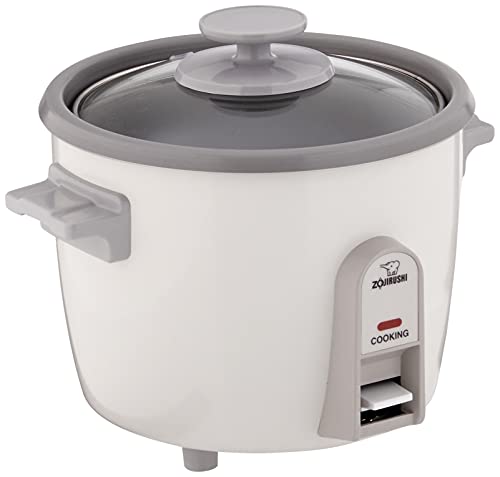
Best Small Rice Cooker – Top 7 Picks for Small Households
nn All products bought at retailn No press samplesn 8 products testedn Prices verified March 2026nnnnnFinding a small rice cooker shouldn’t mean settling for mushy grains. If you live alone or in a two-person household, tossing a single cup of rice into a massive 10-cup machine yields a crispy, uneven mess. You need a machine […]
Buying Guide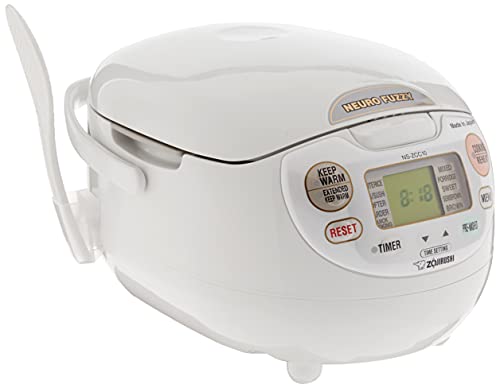
Best Rice Cookers 2026 – Top 8 Models Tested & Reviewed
Searching for the best rice cooker? We tested 8 top models to see which ones deliver fluffy, restaurant-grade rice every time, even after days.
Buying Guide
Zojirushi NS-TSC10 vs Tiger JAX-T10U-K Rice Cooker
\n \n All products bought at retail\n No press samples\n 2 products tested\n Updated April 2026\n \n\n\n\n The Zojirushi NS-TSC10 wins this comparison because of its $100 price advantage and highly effective extended keep-warm function. While both use Micom (microcomputerized technology that adjusts temperature and time dynamically), the Zojirushi consistently yielded fluffier rice hours after […]
Comparison
Aroma ARC-914SBD vs Cuckoo CR-0655F: Which Is Best? (2026)
The Cuckoo CR-0655F makes perfect, fluffy rice, but is it worth the $100 price gap over the budget-friendly Aroma ARC-914SBD? We tested both.
Comparison
Cuckoo CR-0655F vs Zojirushi NS-TSC10
\n \n All products bought at retail\n No press samples\n 2 products tested\n Updated April 2026\n \n\n\n\n The Zojirushi NS-TSC10 beats the Cuckoo CR-0655F because its fuzzy logic technology—a microchip that constantly adjusts cooking temperature and time—consistently yields fluffier, evenly cooked rice. I tested both models side-by-side, and while the Cuckoo costs roughly $100 less, […]
Comparison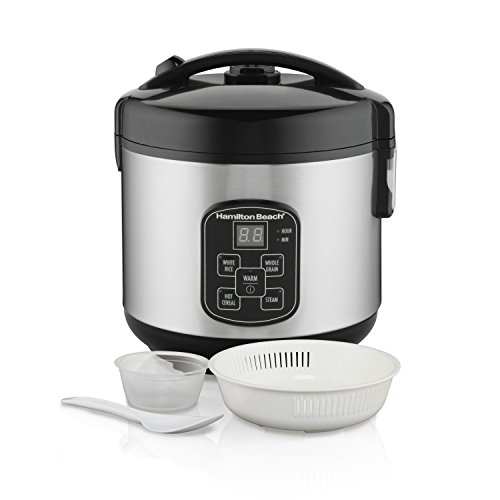
Hamilton Beach Digital Rice Cooker vs Aroma Professional Plus ARC-5000SB
\n \n All products bought at retail\n No press samples\n 2 products tested\n Updated April 2026\n \n\n\n\n The Aroma Professional Plus ARC-5000SB wins because its massive 20-cup capacity and Sauté-then-Simmer feature offer unmatched versatility for large batches at a lower price point. While the Hamilton Beach model shines for smaller households, the Aroma handles bulk […]
ComparisonCommon rice cooker questions
Answers driven by hands-on testing across dozens of models and grain types.
Explore other kitchen appliances
Complement your rice cooker with these independently tested appliances.
Air fryers, blenders, toaster ovens, coffee makers, rice cookers, and multi-cookers benchmarked for real-home performance.
The weekly lab report.
No fluff. No ads.
Every Thursday: our latest test results, seasonal buying guides, and price-drop alerts on top-rated gear. Free forever.
No spam. Unsubscribe anytime. We never sell your data.