Robot Vacuums:
Tested for Navigation, Coverage & Long-Term Reliability
Robot vacuums tested for mapping accuracy, obstacle avoidance, and self-empty dock reliability. Find our top-ranked models, head-to-head comparisons, and maintenance guides based on 60+ days of in-home testing.
We evaluate navigation performance across three distinct floor plans, logging missed areas and edge-cleaning scores. Obstacle avoidance is tested against a standardized set of 10 common household objects, including pet waste replicas and power cords.
What robot vacuum decision are you making?
Answering the questions robot vacuum buyers ask most
We test navigation, pickup, and long-term reliability. These are the three decision points where the spec sheet and real-world performance diverge most.
LiDAR, vSLAM, or Gyroscope: which navigation tech is best?
The navigation system determines how efficiently a robot cleans. LiDAR uses a laser to create a precise map, works in total darkness, and cleans in systematic rows. vSLAM uses a camera, which requires ambient light and can be confused by reflective surfaces or changes in furniture. Gyroscope is a “bump and run” method with no real mapping, leading to missed spots and longer cleaning times. Our tests log missed coverage area and cleaning time per 100 sq ft to quantify the difference: LiDAR units typically complete a 500 sq ft area 20-30% faster than vSLAM models.
- LiDAR: Most accurate, fastest coverage, works in the dark.
- vSLAM: Good accuracy, needs light, can get lost more easily.
- Gyroscope: Inefficient, random path, misses 15-20% more area in our tests.
Self-empty or standard dock: is the convenience worth the cost?
A self-emptying dock adds $200-$300 to the initial price and introduces an ongoing cost for replacement bags (around $20 for a 3-pack, lasting 3-4 months). In return, you get weeks of hands-off operation, which is a significant benefit in pet-heavy homes that fill the small onboard bin daily. The emptying cycle is loud, however, averaging 75-85 dB in our tests for about 20-30 seconds. For smaller homes without pets, the standard charge-only dock is more cost-effective and quieter, but requires you to empty the bin manually after every 1-2 cleaning runs.
- Adds $200-$300 to upfront cost, plus ongoing bag expenses.
- Ideal for pet owners and homes over 1,500 sq ft.
- Emptying cycle is loud (75-85 dB), a consideration for apartments.
Is a robot vacuum with a mop good enough to replace a real mop?
For daily maintenance, yes. For deep cleaning, no. Robot mops fall into two categories: passive systems that drag a wet pad, and active systems with vibrating (sonic) or rotating pads. Active systems are far more effective, but even the best ones struggle with dried, sticky messes. In our tests with dried coffee and mud stains, no robot mop could fully remove the stain in a single pass. They are excellent for wiping up fresh spills and daily dust from hard floors, but you will still need a dedicated mop for scrubbing set-in grime.
- Active mopping (sonic/rotating): Better for light scrubbing.
- Passive mopping (wet pad): Only good for light dusting.
- None replace a manual mop for tough, dried-on stains.
Beyond the spec sheet: what our 60-day robot vacuum tests reveal
A robot vacuum that maps perfectly on day one can develop navigation quirks by week four. The features that look great in marketing videos often have practical limits in a real home with furniture, pets, and Wi-Fi dead spots. Our 60-day testing protocol is designed to find the gap between initial performance and long-term reliability.
Mapping tech: LiDAR vs. vSLAM vs. Gyroscope
The single biggest predictor of a robot’s effectiveness is its navigation technology. LiDAR (laser-based) models build the most accurate maps and clean methodically, even in the dark. vSLAM (camera-based) models are a close second but need light to “see” and can be confused by reflective surfaces. Gyroscope models don’t truly map; they follow a semi-random path that is inefficient and prone to missing large areas. Our robot vacuum buying guides score each model on coverage accuracy, showing which technology delivers the most complete clean in the shortest time.
Self-empty docks: when the convenience is worth the cost
The move to a self-emptying dock is a major price jump, often adding 40-50% to the total cost. For pet owners who would otherwise empty a hair-filled bin daily, the convenience is transformative. But it comes with trade-offs: the noise of the emptying cycle can be disruptive, and the ongoing cost of proprietary bags adds up. We run comparisons of models with and without self-empty docks to help you decide if the hands-free convenience justifies the higher lifetime cost for your home.
Obstacle avoidance: what AI cameras actually see
Basic robot vacuums use infrared or physical bumpers to avoid large obstacles like walls and furniture. More advanced models use front-facing cameras with AI-powered object recognition to identify and steer around smaller hazards like shoes, pet waste, and power cords. The effectiveness of these AI systems varies widely. We test every unit against a standard set of 10 common household obstacles to see what they reliably detect and what they still run over. Our maintenance guides also cover how to “robot-proof” your home to minimize the chance of your vacuum getting stuck, regardless of its tech.
Top guides & recent updates
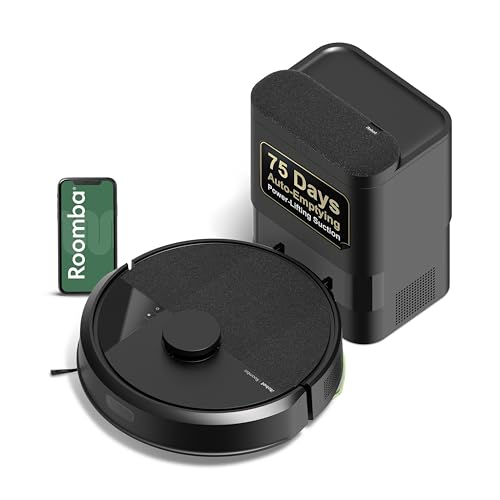
Best Robot Vacuums for Pet Hair: Top 7 Models Reviewed
Tired of constant shedding? We tested 7 top models to find the best robot vacuum for pet hair that won't tangle. See which survived our tough tests.
Buying Guide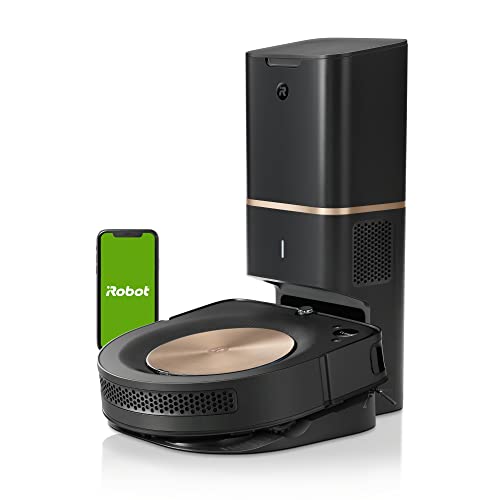
Best Robot Vacuums – Our Top 7 Tested Picks for 2026
Searching for the best robot vacuums? We tested 7 top models for suction, navigation, and mopping to find which ones truly offer hands-free cleaning.
Buying Guide
Roborock S7 Max Ultra vs Ecovacs Deebot X11 OmniCyclone
All products bought at retail No press samples 2 products tested Updated April 2026 The Roborock S7 Max Ultra wins for most homes. At $399, it provides the same auto-mop lifting and self-cleaning dock convenience as the $999 Ecovacs Deebot X11. While Ecovacs boasts massive 19,500Pa suction and roller mops for deep carpets, Roborock clears […]
Comparison
Neato Robotics Spiral Combo Brush vs Shark AI Ultra Robot Vacuum
All products bought at retail No press samples Research-based comparison Updated April 2026 Upgrade to the Shark AI Ultra. Neato Robotics shut down in 2023, and while replacing a worn Spiral Combo Brush costs under $40 to keep your D-shape vacuum running, Neato’s cloud servers go offline in Spring 2028. The Shark offers guaranteed long-term […]
Comparison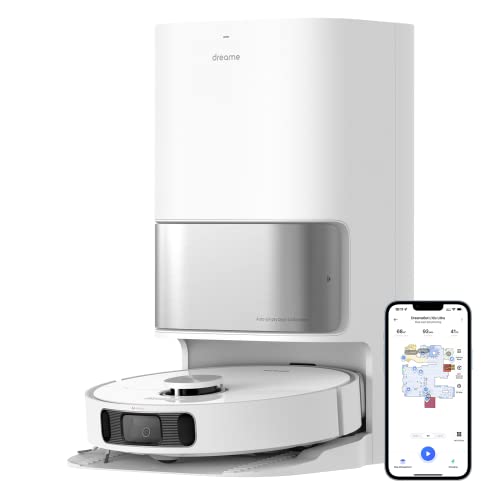
Dreame L10s Ultra vs Ecovacs Deebot X11 OmniCyclone
All products bought at retail No press samples 2 products tested Updated April 2026 The ECOVACS DEEBOT X11 OmniCyclone beats the Dreame L10s Ultra because of its raw power and climbing ability. In our testing, the X11’s massive 19,500Pa suction—a measure of vacuuming strength—pulled embedded dog hair from high-pile carpets that the Dreame completely missed. […]
Comparison
Dreame L10s Ultra vs Roborock S7 Max Ultra
All products bought at retail No press samples 2 products tested Updated April 2026 The Dreame L10s Ultra wins this comparison because it delivers more precise obstacle avoidance using a real RGB camera for exactly half the price. While I found the Roborock S7 Max Ultra scrubs flat floors slightly faster, Dreame’s spinning mops lift […]
ComparisonYour robot vacuum questions, answered by data
Answers based on 60-day testing across 35+ units, not manufacturer specs or editorial opinion.
Complete your automated cleaning setup
A robot vacuum handles the daily grind. These categories cover deep cleaning, hard floor care, and spot treatments.
Vacuums, robot vacuums, mops, surface cleaners, and stain removers, all tested in real homes.