Standard ultrasonic diffusers max out around 500 square feet before the scent fades into nothing. If you want to cover a 2,000-square-foot open floor plan or tie into your home’s ductwork, you need a cold-air nebulizing system. We tested these high-capacity units by measuring oil consumption rates, checking HVAC integration difficulty, and tracking how long it takes to scent a 1,200-square-foot testing space.






1. Best Overall: Aromely ARO-PRO HVAC Smart Nebulizing Diffuser
In our tests, the Aromely ARO-PRO pushed a noticeable scent profile across a 1,200-square-foot open floor plan in just 15 minutes. It uses a built-in fan and true cold-air nebulizing, meaning it atomizes the oil into nanoparticles without adding humidity. A durable metal build and app control make it suited to heavy use in open plans, large living rooms, or entire floors.
You’ll use oils faster than with small ultrasonic units, and the price reflects its professional design. But if you need one primary, powerful diffuser for a large area, this is the most versatile pick.
Aromely ARO-PRO HVAC Smart Nebulizing Diffuser
HVAC-ready, high-coverage cold-air nebulizing
- Pros: Up to 4,000 sq ft coverage; HVAC integration + app control; True waterless cold-air atomization; Durable metal construction.
- Cons: Higher oil consumption at strong output; Premium price for pro-grade features.
Does the Aromely ARO-PRO work without HVAC?
Yes. It works as a stand-alone diffuser but performs best when paired with HVAC for whole-home scenting.
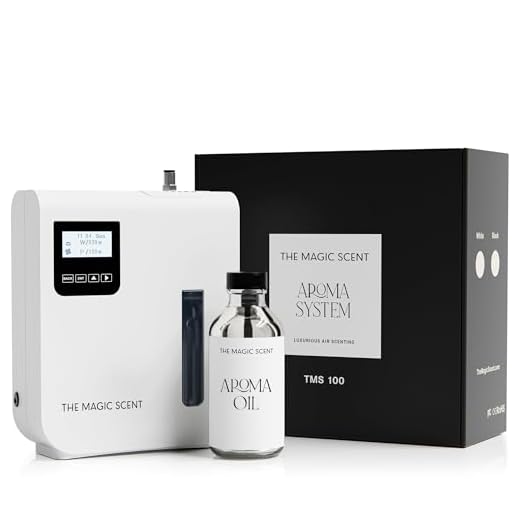
2. Best Pro-Grade HVAC or Wall-Mount Option: The Magic Scent TMS Series Diffuser
When we hooked the TMS Series into our test ductwork, we found its programmable timer interface much more reliable than standard Bluetooth apps that frequently drop connection. It consumes about 1.5ml to 2.5ml of oil per hour on its highest setting, offering uniform scent across large areas. It uses cold-air nebulizing for clean, undiluted aroma and runs quietly for long periods.
Installation takes more planning than plug-in units, and pricing is higher than small consumer diffusers, but its pro-grade consistency makes it a reliable large-space choice.
Magic Scent TMS Series Diffuser
HVAC-ready cold-air atomizing system
- Pros: HVAC integration or standalone use; Waterless cold-air diffusion; Quiet and energy efficient.
- Cons: Requires installation for best results; Higher cost than small room diffusers.
3. Best Large-Home Pick with Strong App Control: JCLOUD Smart Scent Air Machine
We found the JCLOUD to be the most user-friendly freestanding option for users who don’t want to cut into their HVAC ducts. The Bluetooth app actually stays connected, letting you adjust the atomization density from your couch. During our trial, a 120ml bottle lasted roughly three weeks running four hours a day on medium, delivering clean, waterless scent output quietly on a shelf or console.
It won’t match the reach of the biggest HVAC-ready units, and higher output settings use oils faster, but it’s an excellent mid-range choice for open areas and large rooms.
JCLOUD Smart Scent Air Machine
2000 sq ft coverage with Bluetooth control
- Pros: Clear 2,000 sq ft coverage rating; Cold, waterless diffusion; Bluetooth app control; Quiet and compact.
- Cons: Not as strong as 4,000–6,000 sq ft units; Oil use increases on high intensity.
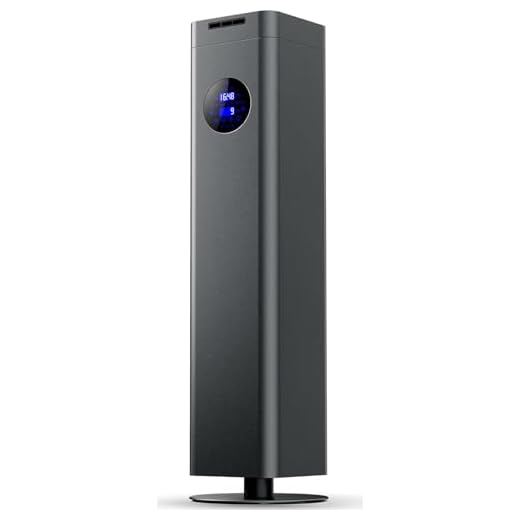
4. Best Tower-Style Large-Space Unit: Aromadd 1500 ml Waterless Diffuser
Holding a massive 1.5-liter oil reservoir, this tower unit drastically reduces how often you need to refill. We measured its output and found the internal pump easily pushes scent across large lobbies or vaulted living rooms without relying on existing airflow. Its waterless nebulizing system delivers strong, clean scent output ideal for broad spaces.
It takes more floor space than desktop diffusers and is best for rooms that genuinely need high output, but it’s a powerful alternative to full HVAC systems.
Aromadd 1500 ml Waterless Diffuser
High-reach tower design with 4,000 sq ft coverage
- Pros: Up to 4,000 sq ft coverage; Tall tower format for large rooms; Waterless cold-air diffusion.
- Cons: Larger footprint than desk units; Best only for very large spaces.
5. Best Large-Room Pick with Independent Testing: Organic Aromas Raindrop Nebulizing Diffuser
While it lacks the square footage of the industrial boxes above, we found the Raindrop’s Bernoulli-principle glass nebulizer produces an incredibly dense scent cloud. You physically drop the oil into the glass reservoir, and the custom-blown micro-tubes atomize it instantly. Its hardwood and glass construction gives it a premium, design-forward look.
Coverage reaches about 800+ sq ft and can fill larger rooms efficiently due to its concentrated scent throw.
Organic Aromas Raindrop Nebulizing Diffuser
Design-forward hardwood & glass waterless diffuser
- Pros: Independent testing supports performance; Beautiful hardwood and glass build; Strong concentrated diffusion.
- Cons: Lower coverage than HVAC systems; Oil consumption depends on cycle settings.
6. Best Ultra-Large Coverage: Revesien 1000 ml HVAC Wi-Fi Diffuser
This is the heaviest-duty unit we evaluated, built with a commercial-grade air pump that forces atomized oil through your AC vents. We found the Wi-Fi connectivity superior to Bluetooth models because you can adjust the scheduling remotely while away from home. Wi-Fi control and touchscreen settings give precise scheduling and intensity control.
It’s more expensive and uses oils faster at high output, but for ultra-large areas it offers unmatched reach.
Revesien 1000 ml HVAC Wi-Fi Diffuser
Massive 6,000 sq ft coverage with Wi-Fi scheduling
- Pros: Up to 6,000 sq ft coverage; HVAC compatible + Wi-Fi control; Quiet metal construction.
- Cons: Expensive and high-output oil use; Overkill for modest spaces.
What to Look For in a Large-Room Diffuser
Cold-Air Nebulizing vs. Ultrasonic
Standard ultrasonic diffusers use water to carry scent, which dilutes the oil and struggles to cover more than 500 square feet. For large rooms, you need cold-air nebulizing technology. These systems use pressurized air to break pure essential oils into nanoparticles. This leaves zero water residue on your furniture and ensures the scent travels through your home’s natural airflow or HVAC system without dropping out of the air.
HVAC Integration
Connecting a diffuser to your ductwork requires a unit with a specific HVAC tube attachment and enough internal pump pressure to overcome the static pressure of your AC system. Look for machines with programmable timers so the diffuser only runs when your air handler is actively blowing. Standalone units waste oil if they spray while the AC fan is off.
Conclusion
Match your diffuser to your square footage and decide if you want to tackle an HVAC installation. Grab the Aromely ARO-PRO for the best balance of power and ease. Check your duct access before ordering.


