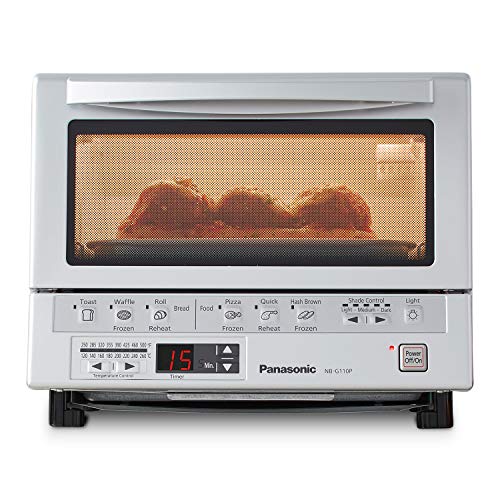
You pull your dinner out of the toaster oven and cut into the meat. The outside looks perfectly browned and crispy. The inside is completely raw. You toss it back in for ten more minutes and ruin the entire meal. A toaster oven cooks faster and hotter than a regular wall oven. The heating elements sit just inches from your food. You need exact times and temperatures to get good results.
Following the instructions on the back of a box usually ends in disaster. Those times apply to massive, standard ovens that take twenty minutes to preheat and hold heat differently. Your countertop appliance is a compact metal box with intense, direct heat. Baking a frozen pizza for twenty minutes leaves you with a blackened puck.
You have to adjust your cooking strategy to match the equipment. Knowing the exact temperatures and times for common foods prevents these disasters. A few simple adjustments to your dial keeps your food cooking evenly without burning the top layer.
The Universal Rule for Toaster Ovens
You cannot follow standard recipe times blindly. Drop the recommended temperature by 25 degrees Fahrenheit for almost every recipe. Then set your timer to go off 25 percent earlier than the instructions suggest. This simple math saves your dinner from burning. If a standard recipe calls for 400 degrees for 40 minutes, you will set your appliance to 375 degrees. You will start checking the food at 30 minutes. This accounts for the confined space and proximity to the heating elements.
Convection settings push hot air rapidly around the food. This speeds up the cooking process significantly. You need to drop the temperature by another 25 degrees if you turn the convection fan on. A convection fan strips away the layer of cold air surrounding the food. This means a 400-degree recipe becomes a 350-degree recipe in a convection toaster oven. Keep a digital meat thermometer nearby to check your proteins early and often.
Cooking Times for Chicken, Pork, and Beef
Meat requires precision in a small space. Chicken breasts dry out fast under direct heat. Cook boneless, skinless chicken breasts at 375 degrees Fahrenheit for 20 to 25 minutes. You want an internal temperature of 165 degrees. Thighs take a bit longer and can handle more heat. Bake chicken thighs at 400 degrees for 25 to 30 minutes to get crispy skin. The higher fat content protects the dark meat from drying out.
Pork chops need high heat for a short time to stay tender. Set the dial to 400 degrees and cook one-inch thick chops for 15 to 18 minutes. Beef requires even less time. Place a steak on the broiler pan and cook it for about 10 to 12 minutes at 400 degrees for a medium-rare finish. Let all meat rest for five minutes on a plate before you cut into it. The juices need time to settle back into the muscle fibers.
Roasting Vegetables to Perfection
Roasting vegetables in a countertop oven is fast and energy-efficient. Soft vegetables cook in a flash. Toss broccoli florets, cauliflower, or bell peppers with olive oil and kosher salt. Roast them at 400 degrees for 15 to 20 minutes. Check them at the 10-minute mark to stir the pan so they brown evenly. The edges should look dark and crispy when you pull them out.
Root vegetables take more time to break down and soften. Dice potatoes, sweet potatoes, or carrots into uniform one-inch cubes. Bake these hard vegetables at 400 degrees for 30 to 35 minutes. Do not crowd the pan. Vegetables steam instead of roasting if they touch each other. Leave physical space between the pieces on your baking tray. Use two pans and cook in batches if you have a lot of vegetables to prepare.
Reheating Leftovers Without Ruining Them
Microwaves turn pizza crust into rubber and make fries soggy. A toaster oven restores leftovers back to their original texture. Reheat pizza slices directly on the wire rack at 350 degrees for 5 to 8 minutes. The crust gets crispy again while the cheese melts evenly. Place a piece of aluminum foil on the crumb tray below the rack. This catches any grease or cheese drips and saves you from a smoky kitchen.
Leftover french fries need high heat to revive them. Spread fries in a single, flat layer on the baking pan. Cook them at 400 degrees for 5 to 7 minutes. Leftover casseroles or pasta dishes require lower heat so the edges do not dry out and harden. Cover the baking dish tightly with aluminum foil. Bake the covered dish at 325 degrees for 15 to 20 minutes until the center is steaming hot.
Baking Cookies, Muffins, and Small Batch Treats
Baking in a small appliance takes some trial and error. The heating elements sit directly above and below your pans. Drop cookie dough onto a small baking sheet lined with standard parchment paper. Bake standard chocolate chip cookies at 350 degrees for 8 to 10 minutes. Watch the tops closely during the final two minutes. Pull them out when the edges turn golden brown.
Muffins rise fast in a compact space. Bake a six-cup muffin tin at 375 degrees for 15 to 18 minutes. Rotate the pan halfway through the baking time. Most countertop ovens have hot spots near the back right corner. Turning the pan prevents one side of your baked goods from turning dark brown while the other side stays pale and undercooked.
Frozen Foods Quick Reference
Frozen convenience foods act unpredictably in small spaces. The packaging always assumes you are using a large conventional wall oven. Frozen pizza is the most common casualty of countertop cooking. Bake a standard frozen pizza at 400 degrees for 12 to 15 minutes. Check the cheese at 10 minutes to prevent a burnt crust. Keep the pizza directly in the middle rack position.
Frozen chicken nuggets or tenders need high heat to crisp the breading quickly. Cook them at 400 degrees for 10 to 12 minutes. Frozen mozzarella sticks melt incredibly fast and explode if left in too long. Bake them at 400 degrees for exactly 6 to 8 minutes. Pull them out the exact second you see white cheese leaking through the breading.
Quick Tips
- Always preheat your appliance for at least five minutes before putting food inside to get an accurate cook time.
- Use the middle rack position for 90 percent of your cooking to balance the top and bottom heat.
- Tear off a sheet of aluminum foil to loosely cover food if the top browns too quickly before the inside finishes cooking.
- Keep a digital instant-read thermometer next to the oven to check meat temperatures without guessing.
- Measure your baking pans before you cook to make sure they do not block airflow along the interior walls.
Frequently Asked Questions
Cooking in a small appliance does not have to end in burnt crusts and raw centers. You just need to adapt to the intense, direct heat. Keep your temperatures slightly lower than standard recipes dictate. Watch your food closely during the final five minutes of the cooking cycle.
Print out these times and temperatures and tape them inside your cabinet door. Grab a digital meat thermometer to take the guesswork out of cooking chicken and pork. You will stop burning dinner and start getting consistent results every time you turn the dial.