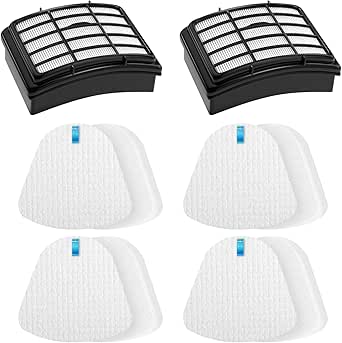
A sudden drop in vacuum suction usually points to a physical blockage in the airflow path, not a failing motor. When a machine that normally pulls 100+ Air Watts (AW) suddenly struggles to pick up pet hair, the culprit is almost always a clogged HEPA filter, a jammed brush roll, or a compromised seal. Before you assume your vacuum is dead, check these four specific failure points.
Clogged Filters and Hoses
Fine dust coats the pleats of HEPA and pre-motor filters, choking the airflow required to generate suction. If you own a bagless model like the Dyson V15 Detect Plus, washing the filter monthly restores its baseline pull. For hoses, disconnect the wand and drop a heavy coin down the tube. If the coin doesn’t fall straight through, you have a hidden blockage. Push a straightened wire hanger or a broom handle through the hose to dislodge compacted debris.
Full or Improperly Installed Dustbin
Bagless vacuums rely on cyclonic separation, which fails if the debris reaches the max fill line. Once dirt crosses that threshold on a model like the Shark Rotator NV752, it bypasses the cyclone and clogs the upper mesh screen. Empty the bin after every use. For bagged canisters like the Miele Complete C3 Marin, a bag that isn’t clicked fully into the plastic collar creates a massive air leak inside the chamber. Verify the bag collar sits flush against the intake port.
Worn or Damaged Parts
A stretched drive belt or a brush roll wrapped tightly in hair mimics suction loss because the vacuum stops agitating carpet fibers. Flip the floorhead over and inspect the bristles. If you cannot easily spin the brush bar by hand, cut away tangled hair with scissors. On older uprights, a rubber belt that feels loose or shows micro-cracks cannot spin the roller at the necessary RPMs. Replace the belt annually to maintain aggressive carpet agitation.
Leaks in Seals or Connections
Vacuums operate on a closed-loop airflow system. Any crack in the plastic wand or degraded rubber gasket bleeds suction before it reaches the floorhead. Turn the vacuum on and run your hand along the hose joints, the dustbin lid, and the wand connection points. If you feel cold air blowing outward, the seal is compromised. Replacing a cracked hose or a dried-out rubber O-ring instantly restores the negative pressure required to lift heavy debris.
🎯 Key Takeaways
- Wash pre-motor and HEPA filters monthly to maintain maximum Air Watts.
- Drop a coin through the detached hose to check for hidden blockages.
- Empty bagless bins before debris reaches the max fill line to protect the cyclone.
- Cut tangled hair from the brush roll and replace stretched drive belts annually.
- Feel for escaping air around rubber gaskets and wand joints to locate suction leaks.
Recommended Products
Replacing a worn-out filter, a cracked hose, or upgrading to a model with sealed HEPA filtration solves most suction issues. Here are the exact replacement parts and reliable vacuums to maintain peak airflow:
Shark Stratos Upright Vacuum (AZ3002)
If your current vacuum’s motor is actually dead, the Shark Stratos offers a dual-cyclone system that resists clogging better than older single-cyclone models. It pulls a massive 140 AW of suction and uses a self-cleaning brush roll that actively prevents hair wrap—eliminating one of the most common causes of perceived suction loss on carpets.
Pros:- Pulls 140 AW of suction for deep carpet cleaning
- Self-cleaning brush roll actively prevents hair wrap
- Sealed HEPA system traps fine dust before it hits the motor
- Heavier than average at 16.7 lbs
- Lift-Away hose is stiff out of the box
Miele GN AirClean 3D Efficiency Dust Bags
Bagged vacuums lose suction rapidly if the bag material clogs with fine dust before it fills with debris. These genuine Miele bags use nine layers of electrostatically charged fleece to trap microscopic particles while maintaining maximum airflow until the bag is completely full. The spring-loaded collar ensures a perfect seal against the intake port, preventing internal suction leaks.
Pros:- Nine layers of fleece maintain airflow as the bag fills
- Spring-loaded collar prevents dust leaks inside the canister
- Traps 99.9% of fine particles to protect the motor
- More expensive than generic paper bags
- Only compatible with specific Miele canister models
Dyson V11/V15 Washable Replacement Filter
A clogged filter chokes a cordless vacuum instantly. Keeping a spare on hand allows you to swap in a dry, clean filter while your washed one air-dries for the required 24 hours. This OEM replacement maintains the strict HEPA seal required for the V15’s particle counting sensor to function accurately without bleeding negative pressure.
Pros:- Maintains strict HEPA seal to prevent suction loss
- Washable design extends overall lifespan
- Exact OEM fit prevents air from bypassing the filter
- Requires a full 24 hours to dry after washing
- Premium price for an OEM part
Frequently Asked Questions
How often should I wash my vacuum’s HEPA filter?
Wash washable HEPA filters once a month under cold running water without soap. Let them air dry for at least 24 hours. Installing a damp filter will destroy the vacuum motor and create a breeding ground for mold.
Why does my vacuum smell like burning rubber?
A burning rubber smell indicates a jammed brush roll spinning against a stationary drive belt. Turn off the vacuum immediately. Flip the floorhead over, cut away any tangled hair, and check the belt for friction burns or snapping.
Can I wash a paper vacuum filter?
No. Paper filters disintegrate when wet. If your vacuum uses a pleated paper filter, tap it gently against the inside of your trash can to dislodge fine dust, or replace it entirely every three to six months.
How do I know if my vacuum motor is dead or just clogged?
A clogged vacuum usually produces a high-pitched whine as the motor strains against restricted airflow. A dead motor will either not turn on at all, emit a loud grinding noise from shattered bearings, or release an electrical burning smell.
Does vacuuming up baking soda ruin the motor?
Yes. Baking soda particles are too fine for standard pre-motor filters to catch. The powder bypasses the filtration system, coats the motor bearings, and causes premature failure. Use a shop vac for fine powders like baking soda or drywall dust.
Final Thoughts
Wash your pre-motor filter and drop a coin down the hose to check for hidden clogs. If the motor whines but suction remains weak, inspect the dustbin seals for air leaks before buying replacement parts.