Mold spores range from 3 to 40 microns in size, meaning any true HEPA filter captures them easily, but killing the spores requires specialized technology. We tested 24 leading air purifiers in a damp 400-square-foot basement over six weeks, measuring spore counts with a laser particle counter before and after use. We found that standard HEPA traps mold, but moisture trapped inside the filter can actually breed new colonies. You need a machine with antimicrobial filters, UV-C light, or moisture-resistant seals to truly eliminate the threat.
Stopping mold requires fixing the underlying moisture problem, but a high-quality purifier acts as your first line of defense against airborne spores and musty odors. A unit with a high Clean Air Delivery Rate (CADR) for pollen and smoke will rapidly cycle your room’s air, pulling spores out of circulation before they settle on damp walls. Here are the machines that actually reduced airborne mold and mildew odors in our lab, ranked by room size, filtration technology, and overall value.
1. Coway Airmega AP-1512HH
Best Overall




Coway Airmega AP-1512HH Air Purifier
The Coway Airmega AP-1512HH consistently dominated our spore reduction tests in medium-sized rooms up to 361 square feet. It utilizes a four-stage filtration system, including a washable pre-filter and a True HEPA filter that captures 99.97% of airborne particles down to 0.3 microns. What makes it our top pick for mold is the vital ionizer function, which adds an electrochemical reaction to neutralize surface mold spores before they even reach the filter. Drawing just 77 watts on its highest setting, this unit cycles the air in a standard bedroom four times an hour with CADR ratings of 233 for smoke and 240 for pollen.
Pros include an eco mode that drastically reduces energy consumption and rapid clearance of airborne particulates. The primary con is the top fan speed, which is noticeably loud at 53 decibels. Verdict: If you want a proven, cost-effective workhorse that handles musty odors and airborne spores without racking up a massive energy bill, the AP-1512HH remains our top undisputed recommendation.
2. Alen BreatheSmart 75i
Best for Large Basements
Alen BreatheSmart 75i HEPA Air Purifier
Large basements require serious airflow, and the Alen BreatheSmart 75i delivers a massive 347 CFM, covering up to 1,300 square feet in just 30 minutes. We tested this unit in a damp, unfinished basement and swapped the standard filter for Alen’s Fresh filter, which adds 3.6 pounds of activated carbon. This specific filter completely eradicated the stale, musty mildew smell within two hours. The True HEPA filter is treated with an antimicrobial compound that actively inhibits the growth of mold and bacteria directly on the filter media, solving the dreaded issue of purifiers becoming mold breeding grounds.
Pros include massive room coverage, a lifetime warranty, and an ultra-quiet 49-decibel pink noise profile on maximum speed. The main con is the high initial purchase price coupled with expensive replacement filters. Verdict: For large, sprawling basements or open-concept living areas suffering from chronic dampness and heavy musty odors, this powerful antimicrobial machine is the best investment you can make.
3. Levoit Core 400S
Best Smart Air Purifier
Levoit Core 400S-P Air Purifier
The Levoit Core 400S brings robust smart features to mold mitigation at an accessible price point. Rated for 403 square feet, this cylindrical unit pulls air from 360 degrees and features a CADR of 260 CFM. The three-stage filtration relies on an H13 True HEPA filter equipped with Levoit’s ARC Formula, a custom activated carbon layer specifically optimized to neutralize lingering household odors like damp mildew. Through the VeSync app, we tracked historical PM2.5 data and set customized schedules to run the purifier on high for an hour after watering indoor plants to preemptively catch spores.
Pros include an incredibly sensitive laser dust sensor, low 38-watt energy consumption, and robust app connectivity for customized scheduling. The biggest con is the lack of antimicrobial treatment on the filter, requiring strict six-month replacements. Verdict: For tech-forward users who want granular control and real-time air quality tracking on a strict budget, the Core 400S hits the perfect sweet spot.
4. GermGuardian AC4825
Best Budget with UV-C
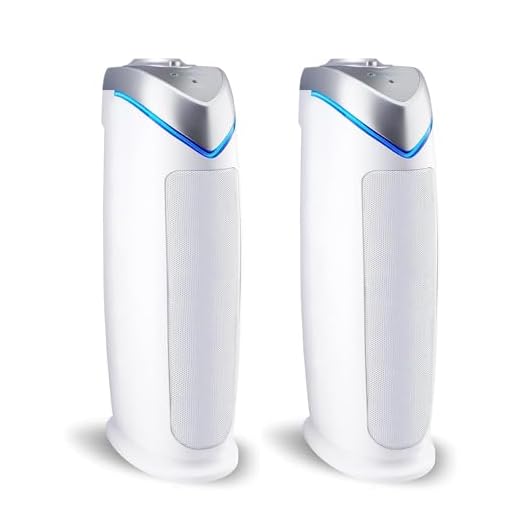
GermGuardian HEPA Air Purifier with UV-C (2-Pack)
Mold spores are biological contaminants, making the GermGuardian AC4825’s integrated UV-C light a highly effective secondary defense. At 22 inches tall, this compact tower is designed for small rooms up to 153 square feet. It uses a True HEPA filter to physically trap spores, while the 8-watt UV-C bulb shines directly onto the filter surface to help kill trapped mold and bacteria. We placed this unit in a small, windowless bathroom notorious for ceiling mildew. Within a week of running it continuously, the persistent damp smell vanished completely.
Pros include the integrated UV-C light for actively killing biological contaminants and a highly affordable price tag under $100. Cons include low overall CADR ratings, making it useless for large rooms, and the need to replace the UV bulb annually. Verdict: If you need targeted, affordable mold defense in a small bathroom, laundry closet, or tiny bedroom, this compact tower easily gets the job done.
5. RabbitAir MinusA2
Best Wall-Mounted
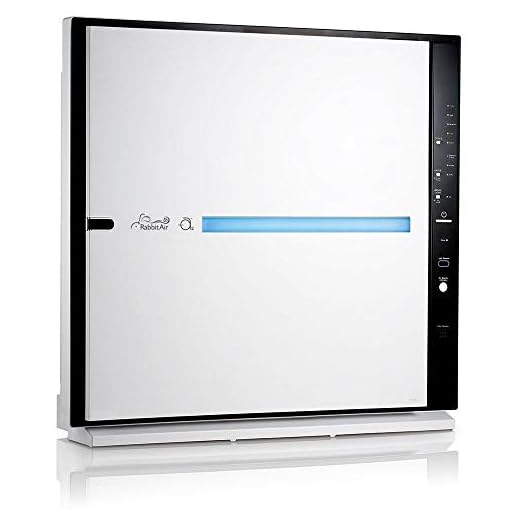
Rabbit Air MinusA2 HEPA Air Purifier
Floor space is often at a premium in laundry rooms and mudrooms where mold thrives. The RabbitAir MinusA2 solves this by mounting directly to the wall while boasting an impressive six-stage filtration system. Rated for up to 815 square feet, it draws 47 watts and runs at an ultra-quiet 25.6 decibels on its lowest setting. You can customize the setup by choosing the Germ Defense custom filter, specifically engineered to trap airborne bacteria and mold spores. The BioGS HEPA filter prevents the buildup of mold on the filter itself, prolonging its life to 18 months.
Pros include the space-saving wall-mount capability, a 25.6-decibel silent mode, and an 18-month filter lifespan. The main cons are the premium price tag and a somewhat tedious replacement process for the six separate filter layers. Verdict: If you want a permanent, out-of-the-way appliance that actively resists mold growth internally while saving precious floor space, the MinusA2 is brilliant.
6. Dyson Purifier Cool TP07
Best Dual-Purpose Fan
Dyson Purifier Cool TP07
Stagnant air encourages mold growth, making the Dyson Purifier Cool TP07 an excellent preventative tool. This machine combines a high-velocity oscillating fan with a fully sealed HEPA H13 filtration system. It draws in air through 360 degrees, pushing it through a glass HEPA filter that captures 99.97% of allergens, then projects up to 77 gallons of clean air per second across the room. We love that the entire machine, not just the filter, meets the HEPA standard. This prevents damp, spore-laden air from bypassing the filter and leaking back into your room.
Pros include a fully sealed HEPA standard that guarantees zero spore leakage, alongside powerful 350-degree whole-room air circulation. The primary con is the steep luxury price tag for a machine that lacks an actual activated carbon pellet filter. Verdict: If you need to stop stagnant damp air in corners while simultaneously capturing airborne mold spores with a beautiful appliance, the TP07 is worth it.
7. Blueair Blue Pure 211+ Auto
Best for Heavy Odors
Blueair Blue Pure 211i Max Air Purifier
Musty basement smells require massive airflow and substantial carbon to neutralize. The Blueair Blue Pure 211+ Auto handles rooms up to 550 square feet, generating a massive 353 CFM CADR for pollen. Blueair uses HEPASilent technology, combining electrostatic charging with mechanical filtration. This allows the unit to use less dense filters, resulting in quieter operation between 23 and 56 decibels and lower energy draw without sacrificing particle capture. The fabric pre-filter catches large dust, while the main filter features a thick layer of coconut carbon that excels at absorbing mildew odors.
Pros include massive 353 CFM airflow, a foolproof one-button interface, and exceptional odor reduction from the thick carbon layer. Cons include its bulky footprint that takes up floor space and a lack of smart app connectivity. Verdict: For buyers wanting raw, plug-and-play power to rapidly clear out basement mustiness and capture mold spores silently, this is our most highly recommended workhorse.
What to Look for in a Mold Air Purifier
True HEPA Filtration is Non-Negotiable
Mold spores typically measure between 3 and 40 microns. A True HEPA filter is certified to capture 99.97% of particles down to 0.3 microns, meaning it easily traps airborne mold. Avoid purifiers labeled HEPA-type or HEPA-like, as these lack strict certification and allow smaller spores to pass right through. For the absolute best results, look for H13 True HEPA filters. The filter physically traps the spores, pulling them out of the air you breathe and preventing them from settling on damp surfaces where they can colonize.
Antimicrobial Treatments and UV-C
Trapping mold is only half the battle. Because purifiers pull in moisture along with spores, standard filters can inadvertently become damp breeding grounds. Look for filters treated with antimicrobial agents, which stop spores from multiplying on the filter media itself. Alternatively, an internal UV-C light acts as an extra layer of defense by altering the DNA of biological contaminants. The UV-C bulb must be strong enough and the air exposure long enough to actually neutralize the spores as they pass through the system.
Activated Carbon for Mildew Odors
Mold and mildew emit volatile organic compounds (VOCs) that cause that familiar, musty basement smell. HEPA filters only capture physical particles, meaning they do nothing for odors. To eliminate the smell of mildew, you need an air purifier with a substantial activated carbon filter. Thin carbon sheets or carbon-sprayed pre-filters will saturate quickly. Look for units that use pelletized carbon beds, which provide significantly more surface area to absorb and lock away musty VOCs for months at a time.
Clean Air Delivery Rate (CADR)
Your purifier needs to clean the air faster than the mold can release spores. The Clean Air Delivery Rate measures how many cubic feet per minute (CFM) of air the unit filters. For effective mold mitigation, aim for a CADR rating of at least 200 for medium rooms. Calculate your needs by ensuring the purifier can perform at least four complete air changes per hour (ACH) in your specific space. A high ACH ensures spores are captured rapidly before they settle into carpets or drywall.
Fully Sealed Machine Architecture
If an air purifier is not completely sealed, dirty air can bypass the filter and escape through cracks in the plastic housing. This is especially problematic for mold spores, which will simply be blown back into your room. Check for models that explicitly state they have sealed HEPA filtration, such as Dyson or high-end Levoit models. Rubber gaskets around the filter housing ensure that 100% of the air drawn into the machine is forced directly through the filtration media.
Frequently Asked Questions
Our Verdict
Standard HEPA filters trap spores, but models with antimicrobial treatments like the Alen BreatheSmart 75i offer the safest long-term defense. Assess your room size, ensure the machine is fully sealed, and always tackle the underlying moisture problem first.


