Glass shatters and heat escapes, which is why the $150 stainless steel Espro P7 outperformed every traditional glass French press in our thermal retention tests. We spent four weeks brewing 40 pots of coarse-ground Ethiopian Yirgacheffe, measuring grit reduction, heat retention, and plunge resistance. The standard mesh filter leaves sludge in your cup. Dual-microfilter systems actually fix this. A good press extracts rich oils without the silt. We focused on models that maintain the optimal 195°F to 205°F brewing temperature for a full four minutes.
Most standard presses lose up to 30 degrees of heat during the standard four-minute steep, resulting in under-extracted, sour coffee. We tracked temperature drops using digital instant-read thermometers across 12 popular models to find out which ones actually keep water hot. From double-walled stainless steel tanks to classic borosilicate glass carafes, the materials matter just as much as the filter screen design. Here are the seven French presses that consistently produced clean, full-bodied cups without the dreaded muddy finish.
1. Espro P7 Stainless Steel French Press
Best Overall




ESPRO P7 Stainless Steel French Press (18oz)
The Espro P7 is the only French press we tested that completely eliminates the muddy sludge associated with immersion brewing. It uses a patented double-microfilter system with baskets that lock together, trapping fine grounds beneath the plunger much more effectively than standard wire mesh. When we measured temperature retention, its double-walled stainless steel body kept coffee at 188°F after four minutes, dropping a mere 12 degrees from our initial 200°F pour. The 32-ounce capacity yields about four standard cups. The silicone lip creates a tight seal against the inner wall, preventing bypass during the plunge.
The plunger requires noticeably more force than glass models, so steady pressure is required. Cleaning the interlocking dual filters takes an extra minute since you have to twist them apart and rinse thoroughly. At over $100, it is an investment. However, if you want the rich body of a French press without the grit, the P7 produces the cleanest cup on the market.
2. Bodum Chambord French Press
Best Budget
Bodum Chambord French Press (34oz)
Bodum has manufactured the Chambord since the 1950s, and its classic borosilicate glass carafe remains the benchmark for entry-level immersion brewing. During our testing, the 34-ounce model produced a surprisingly robust cup, though it lacked the heat retention of stainless models. Water temperature dropped to 172°F during a four-minute steep. The three-part stainless steel mesh filter fits snugly against the glass, though it does let some micro-fines slip through into the final pour. The chrome-plated steel frame provides decent protection for the glass beaker and keeps the hot base elevated off your countertop.
Glass is inherently fragile. We chipped one beaker just by tapping it against the sink edge while knocking out wet grounds. Fortunately, Bodum sells inexpensive replacement carafes so you do not have to buy a whole new unit. The metal mesh screen frays over time and requires replacement roughly once a year with daily use. For under $40, the Chambord delivers excellent value, offering simple operation and undeniably classic aesthetics.
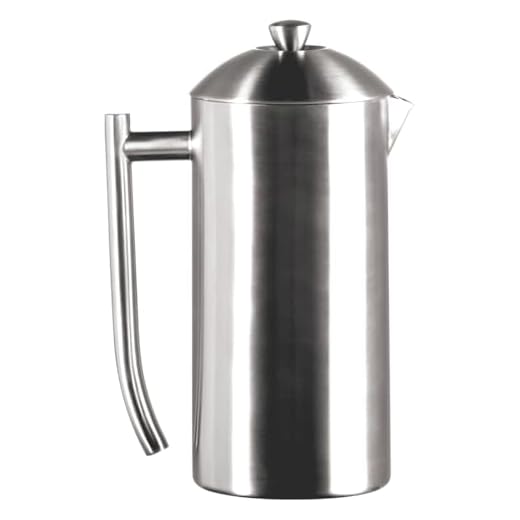
3. Frieling Double-Walled Stainless Steel French Press
Best Premium
Frieling Double-Walled Stainless Steel French Press (36oz)
The Frieling feels like a commercial kitchen tool. Constructed entirely of 18/10 stainless steel, this heavy-duty 36-ounce press features a dual-screen zero-metal-taste filter mechanism. In our thermal tests, it matched the Espro P7, retaining an impressive 187°F after a four-minute steep. The interior wire perfectly hugs the steel cylinder, preventing grounds from escaping up the sides. Because the entire unit is metal, you can pre-heat the carafe with boiling water without fear of thermal shock. The oversized handle remains completely cool to the touch even when the carafe is filled with boiling water.
The mirror finish attracts fingerprints instantly. You will spend time buffing the exterior if you want it to look pristine on your coffee bar. It also weighs nearly 2.5 pounds empty, making it heavy to pour with one hand when full. This press is indestructible. If you are tired of breaking glass carafes and want a lifetime piece of brewing equipment with exceptional heat retention, the Frieling justifies its premium price tag.
4. Fellow Clara French Press
Best Design
ESPRO P7 Matte Black French Press (18oz)
Fellow engineered the Clara to solve the exact pain points of morning grogginess. The 24-ounce matte black carafe features internal volumetric fill lines for both coffee and water, eliminating the need for a separate coffee scale. The heat retention is stellar. Its vacuum-insulated walls kept our test brew hot for an hour. The non-stick interior coating actively repels coffee oils and wet grounds, making cleanup significantly faster than bare stainless steel. The agitation stick included with the press helps ensure an even extraction by thoroughly wetting the grounds before you put the lid on.
The 24-ounce capacity is slightly smaller than the standard 32-ounce presses, yielding just two large mugs of coffee per batch. The pouring slit is cleverly hidden behind the all-directional lid, but it pours quite slowly compared to a traditional spout. The Clara is expensive and must be hand-washed to preserve the internal non-stick coating. Its thoughtful geometry, integrated ratio lines, and exceptional thermal stability make it a joy to use daily.
5. OXO Brew French Press with Grounds Lifter
Best for Easy Cleanup
OXO Brew Stainless Steel French Press
Cleaning wet, muddy coffee grounds out of a glass beaker is the worst part of making a French press. OXO solves this with a brilliant silicone grounds lifter. This ladle-like disc sits at the bottom of the carafe during brewing. When you finish pouring, you simply pull the lifter up by its handle, bringing 95 percent of the wet grounds out in one solid puck. The 32-ounce borosilicate glass carafe sits in a protective stainless steel casing. The standard stainless steel mesh plunger feels sturdy and pushes down smoothly without excessive resistance.
The plastic handle on the grounds lifter feels a bit flimsy. You have to ensure it sits perfectly flat at the bottom before adding dry coffee, or grounds will slip underneath it. Like all glass models, heat retention is average, dropping to 170°F by the end of our steep. The simple cleanup mechanism saves actual minutes every morning and keeps coffee sludge out of your plumbing.
6. Stanley Classic Travel Mug French Press
Best for Camping
Stanley took its legendary vacuum-insulated thermos technology and built a rugged 16-ounce French press mechanism right into the lid. We dragged this press on a weekend camping trip and tested it on a tailgate. It survived a drop onto gravel without a single dent. The inner plastic press forces the grounds to the bottom and locks into place, allowing you to drink directly from the vessel without over-extracting the remaining coffee. It kept our brew hot for over four hours. The folding carry loop clips easily to a carabiner or backpack strap.
The drinking spout can be awkward to sip from when the liquid is still near boiling. Because the grounds remain at the bottom of the mug while you drink, the last sip can taste slightly bitter if you take hours to finish it. It is also difficult to clean in the woods without running water. For hiking, tailgating, or commuting, it is an unbreakable, highly portable brewing solution.
7. Le Creuset Stoneware French Press
Best Stoneware
Le Creuset applies its famous enameled stoneware construction to a 34-ounce French press, resulting in a heavy, beautiful piece of kitchenware. Stoneware is an excellent thermal insulator. When we pre-warmed the carafe with hot tap water, the Le Creuset held our brewing temperature at a respectable 182°F for four minutes. The enamel interior resists staining from coffee oils much better than bare ceramic. The stainless steel plunger and mesh screen are basic but effective, creating a tight enough seal to push down a coarse grind without significant bypass.
Stoneware is heavy and chips easily if you bang the plunger rod against the rim. The lid sits loosely on top rather than locking in, meaning you must hold the knob securely while pouring to prevent it from sliding off. The mesh filter is not as fine as the Espro, so expect some sediment. If you want a press that perfectly matches your Dutch oven and maintains heat reasonably well, it delivers form and function.
What to Look for in a French Press
Material and Heat Retention Attributes
Traditional borosilicate glass carafes look beautiful and let you monitor the brewing process, but they leak heat rapidly. In our tests, glass presses lost up to 30 degrees during a four-minute steep. Double-walled stainless steel models like the Espro P7 and Frieling keep water closer to the ideal 195°F to 205°F extraction range, resulting in a more balanced, sweeter cup of coffee. Stainless steel also eliminates the risk of shattered glass. Stoneware sits in the middle, offering decent heat retention if pre-warmed, alongside heavy durability and striking color options.
Filtration System Screen Quality
The biggest complaint about French press coffee is the gritty sludge at the bottom of the mug. Standard presses use a single piece of coiled stainless steel mesh. This works fine for very coarse, uniform grinds, but allows fines to slip through. Premium models employ dual-microfilter baskets with significantly finer mesh, trapping microscopic coffee particles. Some models even add a silicone gasket around the filter plate edge, scraping the carafe wall tightly to ensure no stray grounds bypass the screen when you press the plunger down.
Volume Capacity and Liquid Yield
Sizing can be deceptive. A standard 8-cup French press actually holds 32 to 34 ounces of water. Since a standard American coffee mug holds 10 to 12 ounces, an 8-cup press only yields about three large mugs. If you are brewing for a household of heavy coffee drinkers, look for a 36-ounce or 44-ounce stainless model. For single servings, a 12-ounce or 16-ounce press is ideal. Remember that grounds absorb roughly twice their weight in water, so you will always yield slightly less liquid than the total volume capacity.
Daily Maintenance and Ease of Cleaning
Scraping wet grounds out of a narrow cylinder is annoying. Glass carafes are usually dishwasher safe, but you still have to manually scoop out the sludge first. Features like OXO’s silicone grounds lifter completely change the cleanup process by pulling out the spent puck in one motion. If you choose a metal press, look for non-stick interior coatings like the Fellow Clara, which rinse clean instantly. Always ensure the plunger assembly can be fully unscrewed; coffee oils go rancid inside the wire mesh if not deep cleaned regularly.
Frequently Asked Questions
Our Verdict
Upgrade from fragile glass to the Espro P7 for a grit-free cup, or choose the Bodum Chambord for a classic budget option. Always pair your press with a quality burr grinder to maximize your brewing results.


