Best Home Beer Brewing Kits
A great brew day is only half the battle — what you do after fermentation decides whether your beer is drinkable or a wasted batch.
Most first-time brewers overspend on the mash and underspend on bottling, kegging, and quality control, then wonder why their beer goes flat or gushes all over the counter. The gear that actually saves a batch is unglamorous: dry-clean bottle racks, a reliable dry yeast, an accurate hydrometer, gas lines that don’t leak, and bottles that can handle real carbonation pressure.
- Bottling is where batches get ruined Wet, dust-contaminated bottles and inconsistent capping cause more infections than dirty fermenters. A dedicated drying rack and drip tray system solves this in one step.
- Dry yeast is underrated A quality dry lager strain like Saflager W34/70 ferments as cleanly as liquid yeast for a fraction of the price, and it’s shelf-stable if you brew in batches.
- You can't fix what you can't measure A hydrometer is the only way to confirm fermentation is actually finished before bottling — skip it and you risk bottle bombs from residual sugar.
- Kegging and bottling need different gear Moving to a kegerator means CO2 and beer lines rated for the right pressure and ID size; reusing bottling equipment for kegging setups is a common rookie mistake.
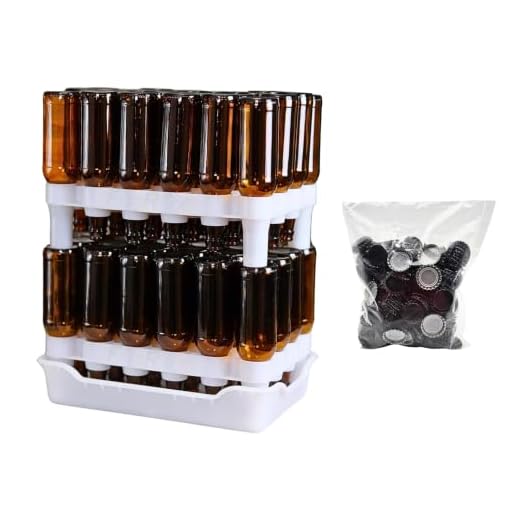


Best Overall: FastRack Complete Bottle Prep Kit
Two 24-bottle racks stack together with a drip tray and 144 caps, so you dry, cap, and store an entire batch in one dishwasher-safe system.
- Racks stack to save counter space between brew days
- Drip tray catches sanitizer runoff before it pools on the floor
- 144 caps is enough for a full 5-gallon batch with extras left over
- Dishwasher-safe plastic holds up to repeated sanitizing cycles
- Racks only hold standard 12oz longneck bottles, not 22oz bombers
- Stacked height needs decent vertical clearance in a fridge or closet
- Caps are a single black color with no size options
Best Value: Fermentis Saflager W34/70 Dry Lager Yeast
This dry lager yeast ferments clean at 48-68°F for a fraction of the cost of liquid strains, making it the most affordable way to brew great lager.
- Costs a fraction of liquid lager strains with comparable results
- No starter or activator required before pitching
- Long shelf life if refrigerated, so it’s easy to keep spares on hand
- Ferments a clean, crisp lager profile that suits pilsners and helles
- Needs consistent cold fermentation temps to perform well
- One packet covers a single 5-gallon batch, not larger volumes
- Slower fermentation than ale yeasts means longer turnaround
Best for Testing ABV: Brewing America Glass Hydrometer Test Jar
Uses just 125ml of wort per reading instead of 250ml, so this narrow borosilicate glass jar wastes less precious homebrew during ABV testing.
- Needs half the sample volume of standard wide test jars
- Borosilicate glass resists thermal shock from hot wort
- Included brush makes cleaning the narrow cylinder actually manageable
- Narrow shape gives more precise hydrometer readings than wide jars
- Doesn’t include the hydrometer itself, just the test jar and brush
- Glass cylinder can tip easily if not set on a flat, stable surface
- Small size means it’s easy to lose track of during a busy brew day
Best for Kegging Setup: 10FT Kegerator Beer CO2 Gas Lines Kit
This kit pairs 10ft of 5/16″ CO2 line with 10ft of 3/16″ beer line and 6 clamps, giving your kegerator a complete, leak-proof gas-to-tap setup.
- Correct ID sizing for CO2 vs. beer lines prevents common flow issues
- Included clamps mean no separate hardware run to finish the setup
- 10ft beer line length is enough to properly balance carbonation
- Works with standard kegerator and keg coupler fittings
- Doesn’t include the CO2 regulator or tank
- Vinyl lines can pick up beer stone over time and need periodic replacement
- Cutting lines to exact length still requires some trial and error
Best for Bottling: Kombucha Bottles Swing Top Glass Brewing Bottles
Extra-thick glass swing-top bottles handle the high carbonation pressure of a finished brew, with a funnel and spare seals for easy, reliable bottling
- No bottle capper needed, which speeds up bottling day considerably
- Extra-thick glass holds up to highly carbonated styles without failing
- Reusable seals cut down on ongoing bottling supply costs
- Included funnel makes filling from a bottling bucket cleaner
- Six bottles only covers a fraction of a standard 5-gallon batch
- Swing-top gaskets eventually wear out and need replacing
- Glass is heavier than standard bottles, adding shipping and storage weight
Side-by-side comparison
|
Best Overall
FastRack Complete Bottle Prep Kit | (2) Stackable
|
Best Value
Fermentis 83-8661-58A1 Saflager W34/70 Dry Lager Y
|
Best for Testing ABV
Brewing America Glass Hydrometer Test Tube Jar & C
|
Best for Kegging Setup
10FT Kegerator Beer Co2 Gas Lines Kit,ID 3/16" Keg
|
Best for Bottling
Kombucha Bottles, Swing Top Glass Brewing Bottles
|
|
|---|---|---|---|---|---|
|
|
|
|
|
|
|
| Category | Bottle prep | Fermentation ingredient | Testing equipment | Kegging hardware | Bottling equipment |
| Best For Stage | Drying & capping | Fermentation | Gravity testing | Kegging | Bottling |
| Reusable | Yes | No | Yes | Yes | Yes |
| Beginner Friendly | 5 /10 | 4 /10 | 4 /10 | 3 /10 | 5 /10 |
| Price | $39.99 | $9.77 | $16.69 | $19.99 | $27.95 |
| BUY NOW | BUY NOW | BUY NOW | BUY NOW | BUY NOW |
What to look for in Home Beer Brewing Kits
Do I need a hydrometer if I'm just brewing for fun?
Yes. A hydrometer is the only reliable way to confirm fermentation has actually finished before you bottle. Bottling too early because the airlock stopped bubbling is one of the most common reasons homebrew bottles gush or explode.
Can I use the same lines for kegging that I use for bottling?
No, kegging and bottling are separate systems. Kegging requires CO2 gas lines and beer lines with specific inner diameters (typically 5/16″ for CO2 and 3/16″ for beer) to maintain proper pressure and carbonation, which bottling setups don’t need at all.
Is dry yeast really as good as liquid yeast?
For most styles, yes. Modern dry yeast strains like Saflager W34/70 are manufactured to tight viability standards and ferment just as cleanly as liquid strains, while costing significantly less and not requiring a starter.
How many bottles do I need for a standard batch?
A typical 5-gallon batch fills about 48-50 twelve-ounce bottles. If you’re using swing-top bottles like the Grolsch-style set, plan on buying multiples since most sets only include six.
The bottom line
- FastRack Complete Bottle Prep Kit bundles drying, capping, and storage into one dishwasher-safe system
- Fermentis Saflager W34/70 delivers a clean lager fermentation at a fraction of liquid yeast cost
- Brewing America Hydrometer Test Jar confirms fermentation is truly finished before you risk bottling too early
- 10FT Kegerator CO2 Gas Lines Kit gives kegging brewers correctly sized, leak-proof lines out of the box
- Kombucha Bottles Swing Top Set offers a capper-free, reusable way to bottle small or highly carbonated batches
The FastRack Complete Bottle Prep Kit is the smartest overall purchase because it solves the bottling stage that ruins more batches than anything upstream. Pair it with a reliable dry yeast and an accurate hydrometer, and you’ve covered the fundamentals that actually determine whether your beer turns out right.


