The Best Pasta Makers for Perfect Homemade Noodles
Nothing beats the taste and texture of fresh pasta, and a good machine makes it surprisingly simple to achieve at home.
The best pasta makers are built from durable materials, operate smoothly, and offer precise control over dough thickness. Cheaper models often use flimsy parts, resulting in uneven pasta, frustrating jams, and a short lifespan.
- Manual Offers Control Manual machines provide a tactile experience and precise control over rolling speed, which is key for delicate doughs. They are also more durable than many entry-level electrics.
- Italian-Made is a Benchmark Models from Italian brands like Marcato and Imperia are often considered the gold standard due to their robust steel construction and decades of engineering refinement.
- Thickness Settings Matter Look for a machine with at least 6 thickness settings. This versatility allows you to make everything from delicate angel hair to sturdy lasagna sheets.
- Cleaning is a Dry Process Pasta makers should never be washed with water, which causes rust. A dry brush and cloth are all you need to remove flour and dough bits after the machine has air-dried.

Best Overall: MARCATO Made in Italy Atlas 150 Classic Manual Pasta Maker Machine
Experience authentic Italian pasta with this classic manual machine. Its durable chrome steel construction gives you precise control over lasagna, fet
- Incredibly smooth and stable operation
- Produces perfectly consistent pasta sheets
- Durable all-metal construction feels built to last
- Easy to clamp securely to a counter
- Crank handle can slip out if not inserted fully
- Requires manual effort to knead and feed dough
- Cleaning between rollers requires care and a dry brush
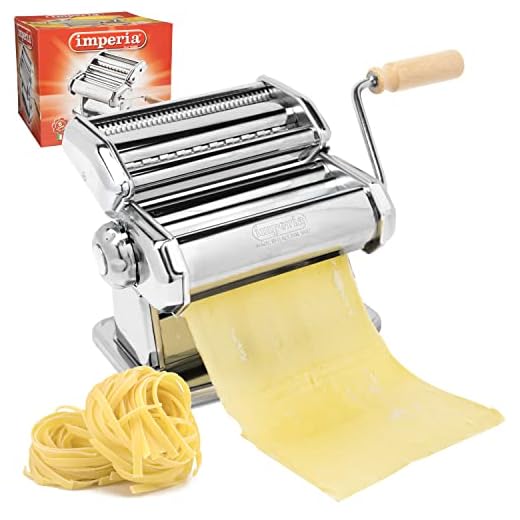
Runner Up: Imperia IPasta Classic Line. Pasta Machine 100% Made in Italy
Craft perfect pasta with 6 adjustable thickness settings. This versatile Italian-made machine is also expandable, compatible with an electric motor an
- Rollers feel exceptionally smooth and well-calibrated
- Solid, heavy construction prevents wobbling
- Can be fitted with an electric motor (sold separately)
- Produces uniform sheets of pasta without tearing
- Fewer thickness settings than the Marcato
- Crank handle has a slightly looser fit
- The included clamp could be longer for thicker countertops
Side-by-side comparison
|
Best Overall
MARCATO Made in Italy Atlas 150 Classic Manual Pas
|
Runner Up
Imperia IPasta Classic Line. Pasta Machine 100% Ma
|
|
|---|---|---|
|
|
|
|
| Product | MARCATO Atlas 150 | Imperia IPasta Classic |
| Award | Best Overall | Runner Up |
| Thickness Settings | 10 /10 | 6 /10 |
| Material | Chrome Steel | Chromed Steel |
| Price | $101.70 | $99.95 |
| BUY NOW | BUY NOW |
What to look for in Pasta Makers
Do I really need a pasta maker to make fresh pasta?
While you can roll pasta by hand with a rolling pin, a machine provides unparalleled consistency in thickness, which is crucial for even cooking. It also makes the process significantly faster and less physically demanding, especially for larger batches.
What's the difference between fettuccine and tagliolini cutters?
The difference is width. Fettuccine are wider, ribbon-like noodles (about 6.5mm), perfect for holding onto creamy or meaty sauces. Tagliolini are much thinner, similar to angel hair (about 1.5mm), and are best suited for lighter oil-based or butter sauces.
How do I prevent the dough from sticking to the rollers?
The key is to use enough flour. Lightly dust your sheet of dough on both sides before each pass through the machine. If it’s still sticking, your dough may be too wet; knead in a bit more flour until it feels smooth and pliable, not tacky.
Can I make gluten-free pasta with these machines?
Yes, but it requires a different approach. Gluten-free doughs lack the elasticity of traditional dough and can be more brittle. You’ll need to work with a well-tested gluten-free pasta recipe and handle the dough gently, often using the machine primarily for sheeting.
The bottom line
- MARCATO Atlas 150: The gold standard for home pasta making, offering durability and flawless performance that justifies its price.
- Imperia IPasta: A professional-grade machine that is a fantastic alternative, delivering exceptionally smooth pasta sheets and excellent build quality.
For consistent, delicious homemade pasta, a quality manual machine is a lifetime investment. The MARCATO Atlas 150 is our top recommendation for its superior build, smooth operation, and precise control. The Imperia IPasta is an equally robust Italian-made alternative that produces beautiful results.