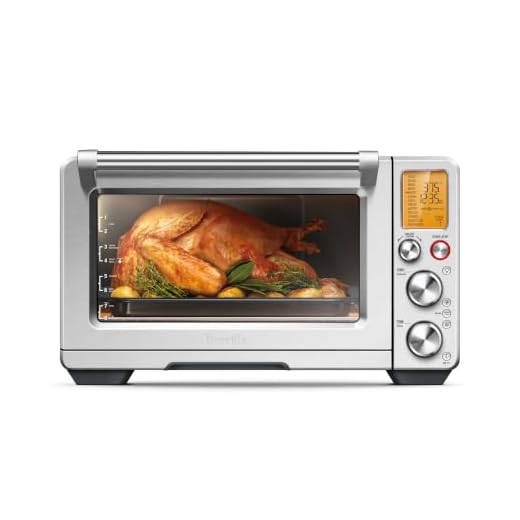
The Ninja Foodi XL Pro DT201 cooks a 5-pound chicken 20 minutes faster than the Breville Smart Oven Air Fryer, but Breville’s six independent quartz elements deliver superior baking precision. These two countertop ovens take completely different approaches to airflow and heating. The Breville relies on dynamic wattage adjustment to eliminate cold spots, while the Ninja uses a high-velocity rear-mounted fan for aggressive roasting. After running both machines through a gauntlet of whole chickens, frozen wings, and delicate cookies, the winner depends entirely on whether you prioritize raw speed or temperature stability.
Breville Smart Oven Air Fryer
👍 Why Choose Breville Smart Oven Air Fryer
- ✓ 13 functions including a dedicated proofing setting
- ✓ Six quartz elements eliminate baking cold spots
- ✓ Heavy-duty brushed stainless steel casing
- ✓ Dehydrates up to four trays of jerky at once
Ninja Foodi XL Pro DT201
👍 Why Choose Ninja Foodi XL Pro DT201
- ✓ Hits 400°F in just 90 seconds
- ✓ Fits a 5-lb chicken and sheet pan simultaneously
- ✓ True surround convection crisps wings without flipping
- ✓ Digital display handle saves vertical space
Breville Smart Oven Air Fryer
👎 Potential Downsides
- ✗ Typically costs $50-$100 more than competitors
- ✗ Dial-based menu requires scrolling through 13 options
- ✗ Takes over 5 minutes to reach 400°F
Ninja Foodi XL Pro DT201
👎 Potential Downsides
- ✗ 17-inch height blocks standard under-cabinet clearance
- ✗ Lacks a dedicated slow cook or proofing mode
- ✗ Louder fan noise during standard baking
Design & Build Quality
Breville’s brushed stainless steel casing feels noticeably thicker and heavier than the Ninja’s exterior. Breville uses a traditional dial-based interface mounted on the right side, extending the oven’s total width to 21.5 inches. Ninja takes a smarter vertical approach by integrating the digital controls directly into the door handle. This saves horizontal counter space, but the Ninja’s 17-inch height requires careful measurement of your under-cabinet clearance. It barely clears standard 18-inch kitchen cabinets, leaving little room for top ventilation.
Features & Performance
Ninja dominates for raw speed. Its rear-mounted heating element and high-velocity fan push the cavity to 400°F in just 90 seconds, shaving 20 minutes off a standard 5-pound roast chicken. You skip flipping wings halfway through entirely. Breville wins on baking precision. Its six independent quartz elements adjust wattage dynamically, meaning a full tray of chocolate chip cookies bakes evenly without rotating the pan. If you bake bread, Breville’s dedicated 85°F proofing mode provides a controlled environment the Ninja lacks.
Frequently Asked Questions
Can you fit a 9×13 baking pan in both ovens?
Both the Breville and the Ninja accommodate a standard 9×13-inch baking pan, provided it lacks oversized handles. The Ninja’s interior is slightly wider, allowing you to slide the included sheet pan directly into the side rails rather than resting it on a wire rack.
Do these countertop ovens get hot on the outside?
Both models generate significant exterior heat during operation, particularly on the top panel. You need at least four inches of clearance above the Breville and Ninja to prevent cabinet damage. Never store plastic items, cutting boards, or bread bags on top of either unit.
Conclusion: Our Final Verdict
Your decision hinges entirely on airflow. Buy the Breville for gentle, precise heat that won’t blow batter sideways. Grab the Ninja if you need aggressive convection to blister chicken skin in record time. Check current prices below.