Pumping 200-degree steam into the seams of luxury vinyl plank (LVP) flooring is the fastest way to void your warranty and warp the planks. While vinyl is waterproof against surface spills, extreme heat melts the adhesive layers and forces moisture through the microscopic joints. To sanitize your floors without ruining the PVC core, you must strictly control the temperature and limit exposure time.
Understanding Vinyl Plank Flooring
Luxury vinyl plank consists of a rigid core, a photographic layer, and a clear urethane wear layer glued together under pressure. The danger isn’t the water itself—LVP is famously waterproof—but the combination of moisture and high heat. Temperatures above 140°F can soften the PVC core and degrade the adhesive binding the layers. Once that glue fails, the top wear layer begins to peel or bubble. Before applying any heat, check your specific brand’s warranty; manufacturers like CoreTec and Shaw explicitly ban steam mops.
Are Steam Mops Safe for Vinyl Plank Floors?
You can use a steam mop on vinyl planks only if you strictly control the temperature and moisture output. Standard steam mops blast continuous heat that easily damages PVC. If you must use one, select a model with variable steam control, like the Shark Genius S5003D, and lock it to the lowest setting. Never let the mop head idle on one spot for more than three seconds. If the floor feels hot to the touch after a pass, your setting is too high and risks warping the planks.
Best Practices for Using Steam Mops on Vinyl Plank
Always vacuum with a hard-floor attachment before steaming to remove silica dust and grit, which act like sandpaper under a hot mop pad. When running a unit like the Bissell Power Fresh 1940A, keep the head moving constantly in smooth, overlapping strokes. Use only distilled water in the tank; hard water leaves calcium deposits that dull the vinyl’s finish over time. Swap the microfiber pad the moment it looks saturated. Pushing a wet pad around just smears dirty water into the textured grain of the planks.
Alternatives to Steam Mops
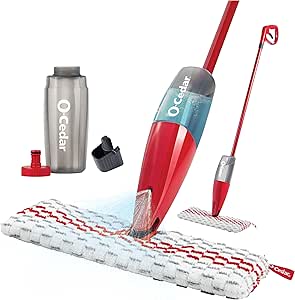
A high-quality microfiber flat mop is the safest way to maintain vinyl planks without risking heat damage. The O-Cedar H2prO Flat Mop uses dual-sided microfiber that traps dirt mechanically rather than relying on steam to break it down. Spray a pH-neutral floor cleaner directly onto the mop pad rather than the floor to prevent liquid from seeping into the seams. For stubborn scuffs, a simple paste of baking soda and water rubbed with a non-abrasive cloth lifts marks faster than a steam mop, with zero risk of warping.
🎯 Key Takeaways
- Verify your flooring warranty; many brands explicitly ban steam cleaning.
- Use only the lowest heat setting to prevent melting the PVC core.
- Never let the mop head idle for more than three seconds.
- Vacuum thoroughly first to prevent grinding grit into the wear layer.
- Use a microfiber flat mop with pH-neutral cleaner for zero-risk maintenance.
Recommended Products
Here are the specific mops and tools that safely clean vinyl plank floors without risking heat damage:
Shark Genius S5003D Steam Mop
If you insist on using steam, this model offers a crucial low-heat setting that minimizes the risk to your LVP adhesive layers. The dual-sided dirt grip pads allow you to clean longer without pushing saturated, dirty water into the plank seams. Keep it moving constantly to avoid warping the PVC core.
Bissell Power Fresh 1940A
This unit features variable digital steam control, allowing you to lock it on the lowest output for vinyl floors. The built-in scrubber should be avoided on LVP to prevent scratching the urethane wear layer, but the continuous, low-moisture steam delivery works well when paired with distilled water and rapid, overlapping passes.
O-Cedar H2prO Flat Mop
This is the safest option for luxury vinyl planks. Because it relies entirely on mechanical cleaning rather than heat, there is zero risk of melting the adhesive or voiding your warranty. The dual-sided microfiber pad traps silica dust and grit effectively when lightly misted with a pH-neutral floor cleaner.
Frequently Asked Questions
Does steam cleaning void my vinyl plank warranty?
Yes, most major manufacturers, including CoreTec, Shaw, and Mohawk, explicitly state that using a steam mop voids the warranty. The extreme heat degrades the adhesive layers and warps the PVC core.
What is the best cleaner to use on luxury vinyl planks?
Use a pH-neutral floor cleaner specifically formulated for vinyl. Avoid ammonia, bleach, or oil-based detergents, which leave a dulling residue or strip the clear urethane wear layer.
How often should I mop my vinyl floors?
Dry vacuum or sweep daily to remove abrasive grit. Damp mop with a microfiber pad and a pH-neutral cleaner once a week. Never flood the floor with water, as moisture can seep into the interlocking seams.
Can I use a Swiffer WetJet on vinyl plank flooring?
Yes, but use it sparingly. The liquid solution is safe for the wear layer, but excessive spraying can force moisture into the joints. A lightly misted microfiber flat mop is a safer, more effective alternative.
Why does my vinyl floor look dull after mopping?
Dullness is usually caused by using too much cleaning product, hard water deposits, or washing with a dirty mop pad. Always use distilled water if your tap water is hard, and swap saturated pads immediately.
Final Thoughts
Stop risking your vinyl plank warranty with high-heat steam. Switch to a microfiber flat mop and a pH-neutral cleaner for daily maintenance. Check your specific flooring manufacturer’s care guide today to confirm their exact temperature limits.