Guessing when meat is done leads to dry chicken and dangerous pork. You need a fast, accurate digital meat thermometer. It stops you from ruining expensive cuts of protein. A good thermometer removes the guesswork entirely. You stick the probe into the thickest part of the meat and read the number.
We tested the most popular models. You need to know which ones actually read temperatures in under three seconds. You will learn exactly how to calibrate your device, where to insert the probe, and what temperatures guarantee safe food.
ThermoWorks ThermoPop 2 Instant Read Thermometer

Choosing the Right Meat Thermometer
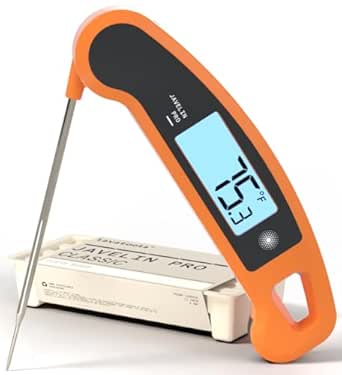
You need a tool that reads temperatures fast. Slow thermometers leave your hand hovering over a hot grill while your steak overcooks. The ThermoPro TP03B Digital Thermometer costs just $7.99 and delivers precise readings. It works well for daily cooking. If you want faster response times, the Lavatools Javelin Sambal provides quick numbers and a compact design. Always look for a clear digital display and a response time under four seconds. Cheap analog dials belong in the trash.
Lavatools Javelin PRO Duo Digital Meat Thermometer
Calibrating Your Thermometer for Accuracy
Your thermometer is useless if it reads five degrees off. You can verify its accuracy using a simple glass of ice water. Fill a cup to the brim with ice, add cold water, and stir. Insert your thermometer probe into the center of the slush. The display must read exactly 32°F (0°C). If the number is wrong, adjust the calibration nut or digital settings according to the manual. The ThermoPro rarely drifts from its factory calibration. You should still check it every few months.
Properly Inserting the Thermometer
Reading the wrong part of the meat gives you false confidence. You must insert the probe into the absolute thickest section of your cut. Avoid touching any bones, gristle, or heavy fat pockets. Bones conduct heat differently and will spike your reading. Slide the probe sideways into thin cuts like chicken breasts or steaks to get enough depth. For whole poultry, aim for the deepest part of the thigh. You will ruin fewer meals once you master this basic physical technique.
Understanding Safe Temperatures
Memorizing safe internal temperatures prevents foodborne illness and dry dinners. You must cook all poultry to 165°F (74°C) to kill harmful bacteria. Beef, pork, and lamb are safe to eat at 145°F (63°C) followed by a three-minute rest period. Ground meats require 160°F (71°C) because the grinding process mixes surface bacteria throughout the batch. Keep a printed temperature chart on your fridge until you know these numbers by heart. The Lavatools Javelin Sambal makes checking these exact targets fast and reliable.
Magnetic Meat Temperature Chart and BBQ Guide

🎯 Key Takeaways
Mastering temperature control requires reliable equipment and proper technique. You need a fast digital thermometer like the ThermoPro or Lavatools models to get accurate readings. Always calibrate your device in ice water before trusting it with an expensive roast. Insert the probe into the thickest muscle tissue while avoiding bones and fat pockets. Memorize the basic safety thresholds for poultry and beef to keep your family safe. You will stop overcooking your food once you trust the numbers instead of the clock.
Recommended Products
Here are the exact thermometers that passed our speed and accuracy tests:
Final Thoughts
The ThermoPro TP03B and Lavatools Javelin Sambal both passed our speed and accuracy tests. Stop guessing when your chicken is done. Buy a digital thermometer, calibrate it in ice water, and start cooking your meat to the exact degree.