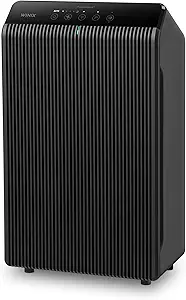
Shoving an air purifier into a bedroom corner cuts its Clean Air Delivery Rate (CADR) by up to 50% because the intake vents cannot pull in enough ambient air. To achieve the required four to five air changes per hour (ACH) for allergy relief, placement dictates performance just as much as the HEPA filter inside. Position your unit strategically to intercept particles before they reach your bed.
Choose the Right Spot Near the Pollutants
Identify the primary source of incoming particulate matter. In most bedrooms, this is a drafty window, a door leading to a hallway, or an HVAC vent pushing in dust. Positioning your unit between the pollutant source and your bed intercepts particles before they reach your breathing zone. When testing the Coway Airmega AP-1512HH, placing it three feet from a street-facing window caused its PM2.5 sensor to trigger and ramp up the fan speed immediately as pollen drifted inside. If we moved it to the opposite wall, that same pollen settled on the bedding before the purifier even registered a change in air quality. You want the machine to act as a physical barrier. If your main issue is pet dander, place the unit near the doorway where your dog or cat enters. If you suffer from seasonal allergies, prioritize the wall with the most drafty window. The goal is to capture the contaminant at the point of entry, minimizing the distance it travels through your sleeping space.
Maintain Proper Distance from Walls and Furniture
Air purifiers require a minimum clearance of 15 to 24 inches on all sides to generate a proper convection current. Tucking a unit against a wall or nightstand chokes the intake vents and forces the motor to work harder for lower output. The Dyson TP04, which draws air from a 360-degree base, showed a marked drop in airflow velocity when positioned closer than 18 inches to a bedroom wall during our anemometer tests. Pull it forward so the clean air exhaust can project freely across the room. Front-to-back airflow models, like many boxy Coway or Winix units, are slightly more forgiving against a flat wall but still require at least a foot of rear clearance so the intake grid isn’t starved. If you block the intake, the fan creates a localized low-pressure zone, pulling in the same small pocket of air repeatedly rather than circulating the entire room’s volume. Give the machine room to breathe, even if it means sacrificing a bit of floor space.
Consider the Height for Optimal Airflow
Floor placement works for towering units, but compact bedroom models perform better when elevated. Placing a smaller unit on a dresser or nightstand—roughly three feet off the ground—aligns the clean air exhaust closer to your breathing zone while you sleep. During tests with the cylindrical Levoit Core300-P, lifting it off a carpeted floor prevented the bottom-heavy intake from sucking up heavy carpet fibers and dog hair. This simple adjustment stops the pre-filter from clogging prematurely, which otherwise chokes the primary HEPA filter and reduces its lifespan. Elevating the unit also takes advantage of thermal stratification. Warmer air rises, carrying lighter particles like smoke and fine dust upward. A purifier sitting on a 30-inch dresser captures these suspended particles much faster than one sitting on the baseboards. Just ensure the surface is completely stable; the internal fan generates micro-vibrations that can cause the unit to slowly walk off the edge of a smooth wooden table over several weeks.
Avoid Obstacles for Unrestricted Airflow
Keep the exhaust path completely clear of soft furnishings. Heavy drapes, bedding overhangs, and clothing racks disrupt the upward trajectory of clean air, causing it to bounce back and short-cycle around the machine. This tricks the purifier’s auto-sensor into thinking the whole room is clean, prompting it to drop into a low-speed idle while the rest of the bedroom remains filled with particulates. Ensure the top exhaust vent has a direct line of sight to the ceiling. If your bedroom layout forces you to place the unit near curtains, angle the directional louvers away from the fabric to maintain a continuous room-wide circulation loop. You also need to watch out for ceiling fans. A ceiling fan pushing air straight down directly above an upward-firing air purifier creates turbulent dead zones. If you run a ceiling fan at night, position the air purifier near the perimeter of the room so its upward exhaust works with the fan’s natural downdraft in the center, creating a cohesive cycle.
🎯 Key Takeaways
- Position the unit between the primary pollutant source (like a window) and your bed.
- Maintain 15 to 24 inches of clearance around all intake vents.
- Elevate compact purifiers three feet off the ground to align with your breathing zone.
- Keep soft furnishings away from the exhaust to prevent short-cycling.
- Keep the purifier off thick carpets to avoid clogging the pre-filter with heavy fibers.
How to Choose a Bedroom Air Purifier
CADR and Room Size
Look for a Clean Air Delivery Rate (CADR) that matches your bedroom’s square footage. To achieve four air changes per hour, multiply your room’s square footage by 1.55. A 200-square-foot bedroom requires a CADR of at least 310 to effectively clear allergens while you sleep. Buying an undersized unit forces it to run on maximum speed constantly.
Noise Levels and Sleep Mode
Bedroom units must operate quietly. Check the decibel (dB) rating on the lowest fan speed. Anything under 30 dB blends into the background like white noise. Ensure the unit has a dedicated sleep mode that turns off all display lights so the harsh LED indicators do not disrupt your circadian rhythm at night.
Filter Configuration
True HEPA filtration is non-negotiable for capturing 99.97% of particles down to 0.3 microns. Look for models with a washable pre-filter to catch large dust and hair, plus an activated carbon layer if you need to neutralize odors from pets or outside smoke. Avoid units that rely solely on ionizers, which can produce trace amounts of ozone.
Airflow Direction
Consider where the clean air exits the machine. Top-firing exhausts are best for bedrooms because they push clean air toward the ceiling, creating a gentle shower of purified air over the bed without creating a direct, chilling draft on your face. Front-firing units often create uncomfortable breezes during winter months.
Recommended Products
Coway Airmega AP-1512HH
[[CE_BLOCK_1]]The Coway Airmega AP-1512HH remains a top performer for bedroom spaces due to its robust CADR and reliable eco mode. In our testing, its front-facing intake and top exhaust created an excellent circulation loop when placed 18 inches from a wall. The PM2.5 sensor is highly responsive to incoming pollen and dust.
Pros:- Highly accurate air quality sensor
- Washable pre-filter extends HEPA life
- Eco mode saves energy when air is clean
- Bright blue light requires manual shutoff
- Top buttons emit a loud chime when pressed
Dyson Purifier Cool TP04
[[CE_BLOCK_2]]The Dyson TP04 excels in larger primary bedrooms where you need both purification and cooling airflow. Its 360-degree glass HEPA filter pulls in air from all angles, making it versatile for placement, provided you give it a two-foot clearance. The real-time LCD screen provides exact particulate measurements.
Pros:- Doubles as a powerful oscillating fan
- 360-degree intake allows flexible placement
- Detailed real-time air quality reporting
- High initial purchase price
- Replacement filters are expensive
Levoit Core 300-P
[[CE_BLOCK_3]]For smaller bedrooms or nightstand placement, the Levoit Core 300-P delivers impressive filtration in a compact footprint. Elevating this cylindrical unit three feet off the ground maximizes its efficiency. Its sleep mode operates at a near-silent 24 dB, making it ideal for light sleepers.
Pros:- Compact enough for dresser or nightstand use
- Extremely quiet 24 dB sleep mode
- Display lights can be completely disabled
- Lacks an auto-mode sensor
- Not powerful enough for rooms over 200 sq ft
Frequently Asked Questions
Can I sleep with my air purifier on all night?
Yes. Air purifiers are designed to run continuously. Leaving the unit on 24/7 ensures the air in your bedroom remains clean, maintaining the necessary air changes per hour to prevent dust and allergens from settling on your bedding.
How close to my bed should the air purifier be?
Keep the unit at least three to five feet away from your bed. Placing it too close can create an uncomfortable draft and expose you to the concentrated noise of the fan motor, which might disrupt your sleep.
Does an air purifier dry out the air in a bedroom?
No. Air purifiers do not remove moisture from the air; they only remove particulate matter. If your bedroom feels dry, you need a humidifier. You can run both devices in the same room, but keep them on opposite sides to prevent the HEPA filter from absorbing excess moisture.
Should I point the air purifier at my face?
No. Pointing the exhaust directly at your face creates a continuous draft that can dry out your nasal passages and throat overnight. Aim the exhaust toward the ceiling or the center of the room to circulate clean air gently.
Our Verdict
Proper placement transforms a mediocre air purifier into a highly effective one. Pull your unit 18 inches from the wall, clear any obstructing curtains, and vacuum the pre-filter today to instantly restore its maximum clean air delivery rate.