You pull a beautifully browned chicken breast out of the oven, but a lingering doubt ruins your appetite. The outside looks perfect. The inside might still be raw and ready to send your family to the emergency room. Guessing by the color of the juices is a gamble you lose eventually. Pink juices can happen in fully cooked poultry, while clear juices can show up in undercooked pork.
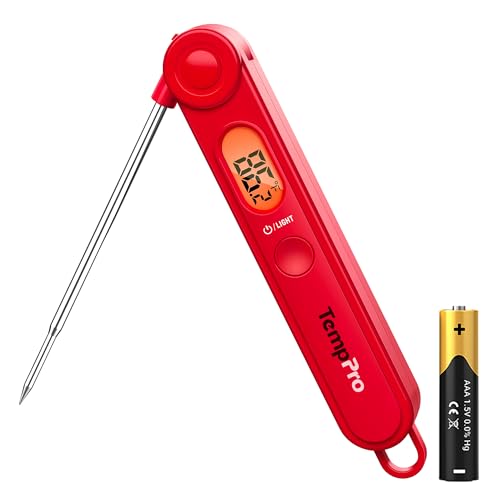
Safe internal temperatures matter because harmful bacteria like Salmonella and E. coli survive up to specific heat thresholds. A reliable kitchen thermometer removes the guesswork entirely. When you know exactly what temperatures hit the safety mark for chicken, beef, pork, and seafood, you stop overcooking your expensive cuts. You serve juicy steaks and safe roast dinners without slicing everything open to check the center.
Food safety agencies set precise guidelines based on lethality curves, which track how long bacteria survive at certain heat levels. You do not need a science degree to follow these rules. You just need an instant-read thermometer and a clear breakdown of the exact numbers for every type of meat in your fridge.
Poultry Demands Exactly 165 Degrees Fahrenheit
Chicken and turkey harbor bacteria deep within their muscle fibers. You must cook all poultry to an internal temperature of 165 degrees Fahrenheit. This rule applies to whole birds, individual breasts, thighs, and ground poultry. Insert your thermometer probe into the thickest part of the breast or the innermost part of the thigh. Avoid hitting the bone. Bone conducts heat differently than meat and gives you a falsely high reading.
Cooking past 165 degrees Fahrenheit dries out the white meat quickly. Dark meat like thighs and drumsticks actually tastes better and feels more tender when taken to 175 degrees Fahrenheit. The connective tissue breaks down at that higher heat. You stay completely safe anywhere past 165 degrees, so aim slightly higher for dark meat to get the best texture without worrying about undercooking.
Whole Cuts of Beef and Veal Need 145 Degrees
Steaks, roasts, and chops from beef or veal are dense muscles. Bacteria live mostly on the surface of these whole cuts. Cooking the outside kills the surface bacteria quickly. The USDA recommends taking the internal temperature to 145 degrees Fahrenheit, followed by a three-minute rest period. Resting allows residual heat to finish off any remaining bacteria while letting the juices redistribute through the muscle fibers.
A steak cooked to 145 degrees Fahrenheit sits firmly in the medium-well category. Many cooks prefer steaks at medium-rare, which hits around 130 to 135 degrees Fahrenheit. The official safety guidelines stick to 145 degrees to eliminate all risk. If you choose to cook a steak to medium-rare, buy high-quality meat from a trusted butcher and sear the outside at a high temperature to handle the surface contaminants.
Ground Meat Requires 160 Degrees Fahrenheit
Grinding meat takes any surface bacteria and mixes it thoroughly through the entire batch. A burger cooked rare is significantly riskier than a steak cooked rare. You must cook all ground beef, pork, veal, and lamb to an internal temperature of 160 degrees Fahrenheit. This applies to meatloaf, meatballs, and taco meat. There is no safe leeway for undercooked ground meat.
Checking the temperature of a burger patty requires a specific technique. Slide the thermometer probe through the side of the patty rather than pushing it down from the top. Pushing straight down usually puts the sensor right against the hot grill grate or pan surface. Going through the side places the sensor exactly in the center of the meat for an accurate 160-degree reading.
Pork Chops and Roasts Hit Safety at 145 Degrees
People spent decades cooking pork until it turned dry, gray, and completely tough. The USDA updated the safe temperature for whole cuts of pork to 145 degrees Fahrenheit, paired with a three-minute rest. This lower temperature leaves pork chops and tenderloins juicy and slightly pink in the center. Trichinosis, the parasite that sparked the old rules about overcooking pork, is essentially eradicated in commercial pork production.
Pull your pork from the heat when the thermometer reads about 140 degrees Fahrenheit. The internal temperature will continue to rise during the mandatory three-minute rest period. This carryover cooking safely brings the meat up to the final 145-degree target. If you leave the pork on the heat until it hits 145 degrees, the resting phase pushes it over 150 degrees and ruins the texture.
Seafood and Fish Call for 145 Degrees
Fish cooks much faster than terrestrial meat. The safe internal temperature for fin fish like salmon, cod, and tilapia is 145 degrees Fahrenheit. You can often tell fish is done when the flesh turns opaque and flakes easily with a fork. Using a thermometer provides absolute certainty. Insert the probe into the thickest part of the fillet to check for the correct temperature.
Shellfish safety relies more on visual cues than a digital thermometer. Shrimp and lobster turn red and their flesh becomes pearly opaque. Clams, mussels, and oysters are safe when their shells pop wide open during cooking. Throw away any shells that remain clamped shut after boiling or steaming. Scallops should turn milky white and feel firm to the touch when fully cooked.
Leftovers and Casseroles Must Hit 165 Degrees
Reheating previously cooked food carries its own set of rules. Leftovers, casseroles, and any dish combining multiple ingredients must reach 165 degrees Fahrenheit. Food sitting in the refrigerator can grow bacteria over a few days. Hitting 165 degrees kills off anything that developed during storage. Microwave reheating often creates cold spots, so stir the food halfway through the heating process.
Take the temperature of casseroles in several different spots. The edges might boil while the direct center remains dangerously lukewarm. Stick the thermometer right into the middle of the dish and let it stabilize. If the reading falls below 165 degrees Fahrenheit, put it back in the oven or microwave. Cover the dish with foil if the top starts burning before the center finishes heating.
Turkey Requires Extra Attention at 165 Degrees
Cooking a whole turkey presents a unique challenge because the bird has massive, dense breasts and much smaller wings. You still need every part to hit 165 degrees Fahrenheit. A stuffed turkey requires the stuffing itself to reach 165 degrees as well. The stuffing acts like a sponge, soaking up raw poultry juices as the bird cooks. You must check the center of the stuffing, not just the meat.
A safe turkey does not have to be a dry turkey. Pull the bird out of the oven when the breast reads 155 to 160 degrees Fahrenheit. Tent it with aluminum foil and let it rest on the counter for 30 minutes. The internal heat will push the final temperature past the 165-degree mark safely. This carryover trick saves your holiday dinner from tasting like sawdust.
Quick Tips
- Calibrate your digital thermometer once a month by submerging the probe in a glass of ice water. The screen should read exactly 32 degrees Fahrenheit within a few seconds.
- Clean your thermometer probe with hot, soapy water immediately after testing raw or partially cooked meat to avoid cross-contamination.
- Pull large roasts and whole turkeys from the oven when they are 5 to 10 degrees below your target temperature. Carryover cooking will bridge the gap while the meat rests on the counter.
- Insert the thermometer probe at least half an inch into the meat. Most digital models have a tiny dimple on the metal stem showing exactly where the sensor stops.
- Test the temperature in three different places on a whole chicken or turkey. Check the thickest part of the breast, the innermost part of the thigh, and the innermost part of the wing.
Frequently Asked Questions
Relying on a kitchen thermometer replaces cooking anxiety with total control. You stop serving dry chicken breasts and you eliminate the risk of undercooked burgers. Memorizing the major benchmarks takes only a few cooking sessions. Poultry and leftovers need 165 degrees Fahrenheit. Ground meats require 160 degrees. Whole beef, pork, and seafood are safe at 145 degrees with a three-minute rest.
Go check your kitchen drawers for a thermometer right now. If you do not own an instant-read model, order a basic digital one. Wash the probe, check it in ice water to confirm it reads 32 degrees, and start measuring your dinner tonight. You will immediately notice your meals taste better when you stop guessing.
Recommended Products