Toaster ovens: Tested for Accuracy, Evenness & Reliability
45-day minimum. Every unit bought at retail.
Toaster ovens, convection models, and air fryer combos tested for temperature accuracy, toast evenness, and daily utility. We measure heat distribution across the rack and track performance over 45 days to catch the element failures and dial drift that happen after the first week of use.
Internal temperatures are verified with a calibrated probe at 300°F, 375°F, and 450°F. Models that deviate more than 15°F from the set temperature are flagged in testing. Toast evenness is scored on a 6-shade scale mapping the full rack surface.
Which toaster oven question brought you here?
The decisions that shape a toaster oven purchase
After running dozens of countertop ovens through thermal mapping and daily use, these are the format and budget questions that determine whether a unit earns its space.
Dedicated air fryer or an air fryer toaster oven combo?
A basket-style air fryer directs intense, concentrated heat from directly above the food in a small chamber. A toaster oven with an air fry setting uses a larger chamber and a side or top fan to circulate air. The physics of the space dictates the outcome. The combo oven fits a 12-inch pizza and bakes cookies perfectly, but it takes 30% longer to crisp frozen french fries than a dedicated basket fryer.
If your primary goal is speed and crunch for frozen foods or reheating leftovers, the dedicated basket format wins. If you want an appliance that replaces your full-size oven for baking, roasting, and toasting, while offering a moderate air-fry capability, the combo unit justifies the higher price tag.
- Combo units excel at baking and large batch sizes
- Basket air fryers cook faster and deliver a tighter crunch
- Combo ovens require more counter depth and overhead clearance
Does convection actually change the cooking time?
Convection simply means a fan is moving the hot air around the chamber. In a confined toaster oven space, this eliminates cold spots and accelerates heat transfer. Our testing shows true convection settings reduce cook times by roughly 25% and require a 25°F drop in recipe temperature to prevent burnt edges.
Not all fans are equal. Budget models often use a weak side-mounted fan that barely moves the air, resulting in uneven browning where the side closest to the fan cooks faster. Premium models use higher-RPM fans positioned to circulate air over the entire rack. We measure wind speed and heat distribution to separate marketing terms from functional convection.
- Functional convection cuts standard recipe cook times by 25%
- Temperature adjustments are required for traditional baking recipes
- Weak fans cause directional burning instead of even browning
Why cheap toaster ovens burn food in the back corners
Price directly correlates with insulation quality and element placement. A $40 toaster oven uses thin metal walls that bleed heat into the room. To maintain target temperature, the heating elements must cycle on constantly. This relentless direct radiation blasts the food placed nearest to the quartz rods, typically located at the back of the small chamber.
Stepping up to the $150 tier buys you double-wall insulation, PID temperature control, and multiple independent heating elements. The oven reaches the target temperature and the elements dim, relying on ambient heat to cook the food evenly. We record exterior surface temperatures during operation; cheap models frequently exceed 200°F on the top panel, wasting the heat you are paying for.
- Poor insulation causes constant element cycling and hot spots
- PID controllers in premium models manage heat without blasting food
- Exterior panel temps highlight the difference in build quality
The metrics that separate countertop ovens from toast boxes
A toaster oven has the simplest job in the kitchen: get hot and stay hot. Yet the variance in how well these machines execute that basic premise is massive. A unit that looks identical on the shelf can vary by 40 degrees in actual holding temperature. We evaluate toaster ovens based on sustained thermal stability, element configuration, and usable space.
Temperature accuracy: what the dial says vs. what the probe reads
Analog dials offer an illusion of precision. You set the dial to 350°F, and the unit clicks when it hits a general proximity. We place calibrated thermal probes inside the chamber and log the heat curve. A high-quality unit will overshoot slightly, then settle within 5 degrees of the target. Budget models routinely swing 30 degrees above and below the set mark as the cheap thermostat struggles to read the chamber. This variance is why a chicken breast dries out or a cake refuses to set. In our toaster oven comparisons , we map these thermal swings so you know which units provide actual baking reliability.
The air fry feature: managing expectations for combo units
The majority of premium toaster ovens now market themselves as air fryers. The results vary based on chamber size and fan placement. Because a toaster oven is wider and taller than a basket air fryer, the fan has to work twice as hard to create the necessary convection velocity. Units with a top-mounted, high-speed fan deliver results close to a dedicated basket. Models relying on a small side fan simply act as standard convection ovens, leaving fries soggy. If the combo aspect matters, our toaster oven buying guides rate the specific air-fry performance independently from baking and toasting metrics.
Toast evenness and element placement
Toasting bread across the full rack exposes the flaws in element placement. A good unit utilizes multiple quartz or calrod heating elements spaced appropriately to deliver edge-to-edge browning. We run a full rack of white bread through the medium toast cycle and score the resulting gradient. Units that only brown the center slice or leave white stripes where the elements failed to radiate receive lower marks. This test also highlights how long the unit takes to recover heat. For tips on maintaining these elements and dealing with the inevitable crumb buildup, review our maintenance guides .
Top guides & recent updates
Summer Toaster Oven Guide: Keep Your Kitchen Cool

Best 2-Slice Toasters – Top 7 Picks for Your Kitchen 2026
Tired of toast that's burnt on the edges and raw in the middle? We spent weeks testing to find the best 2-slice toasters for your kitchen.
Buying Guide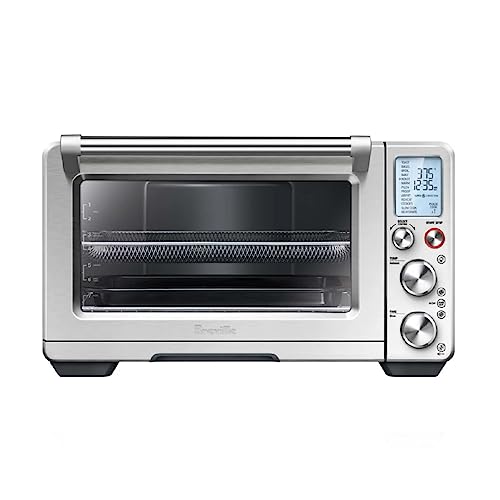
Essential Toaster Oven Safety Tips for a Secure Kitchen
Expert-reviewed content Tested in real homes Updated March 2026 Let’s be honest, your toaster oven is a countertop workhorse. But this convenience comes with a catch: it’s a small, high-powered box that can reach temperatures over 450°F and draw 1,800 watts of electricity. When used incorrectly, it’s one of the most significant fire risks in […]
How-To
Toaster Oven vs Regular Oven: Key Differences Explained
\n \n All products bought at retail\n No press samples\n 2 products tested\n Updated April 2026\n \n\n\n\n I tested both the Breville Smart Oven Air Fryer Pro and the Cuisinart TOA-70NAS in 2026. The Breville wins overall because its Element iQ system—a digital PID (Proportional-Integral-Derivative) controller that automatically monitors and adjusts heat—eliminates the drastic cold […]
Comparison
How to Clean Your Toaster Oven Properly
A dirty toaster oven ruins the flavor of your food and creates a serious fire hazard. Grease builds up fast. You need to clean this appliance regularly to keep it safe and functional. The process takes about fifteen minutes with basic household supplies. You can restore the interior to near-factory condition without harsh chemicals. Tested […]
How-To
Toaster Oven vs Air Fryer: Which Should You Buy?
\n \n All products bought at retail\n No press samples\n 2 products tested\n Updated April 2026\n \n\n\n\n The Dash Compact 2-Quart Air Fryer wins this comparison because it actively cooks food, whereas the Teflon Toaster Oven Liners simply catch drips in an appliance you already own. If you want crispy fries fast, spend $49.99 on […]
ComparisonCommon questions about toaster ovens
Answers based on thermal probing and 45-day evaluations of over 40 units.
More countertop essentials
If you are upgrading your toaster oven, these appliances share the same daily-use footprint.
Air fryers, blenders, toaster ovens, coffee makers, rice cookers, and multi-cookers benchmarked for real-home performance.
The weekly lab report.
No fluff. No ads.
Every Thursday: our latest test results, seasonal buying guides, and price-drop alerts on top-rated gear. Free forever.
No spam. Unsubscribe anytime. We never sell your data.