A great espresso machine shouldn’t require a barista license to operate, but it does need consistent water temperature and adequate pump pressure to extract a proper crema. After pulling hundreds of shots across 24 different machines over the past six months, we found that true 9-bar pressure is the dividing line between bitter, under-extracted coffee water and rich, cafe-quality espresso. Many cheaper models boast 15 or 20 bars, but that is just peak pump pressure, not the sustained pressure hitting the puck.
Making great espresso at home means balancing your budget against your willingness to learn dial-in techniques. Semi-automatic machines give you control over grind size and yield, while super-automatics handle the tamping and extraction with a single button press. We evaluated heat-up times, steam wand power for microfoam, and overall build quality to find the most reliable options. Here are the machines that consistently produced the best-tasting shots during our blind taste tests.
1. Breville Barista Express BES870XL
Best Overall




Breville Barista Express Espresso Machine
The Breville Barista Express remains the benchmark for entry-level home espresso because it integrates a conical burr grinder right into the footprint. Operating at 1600 watts, its thermocoil heating system brings the water up to exactly 200°F in under a minute. During our testing, the built-in PID controller maintained tight temperature stability, which prevented the sour notes we often taste in shots pulled from cheaper thermoblock machines. The analog pressure gauge is incredibly helpful for beginners learning to dial in their grind size and tamp pressure. You get a 54mm portafilter, which is slightly smaller than commercial 58mm sizes, but it easily holds an 18-gram dose for a standard double shot.
The single-hole steam wand requires a bit of patience. It takes about 45 seconds to texture 6 ounces of milk for a latte, whereas a dual-boiler machine does it in 15 seconds. However, for under $750, you get everything you need in one box. It is the perfect balance of manual control and beginner-friendly features, provided you are willing to learn basic puck prep.
2. Gaggia Classic Pro
Best Entry-Level Prosumer
Gaggia Classic Pro Espresso Machine
The Gaggia Classic Pro is a utilitarian powerhouse that prioritizes commercial-grade components over modern digital conveniences. It features a heavy-duty chrome-plated brass 58mm portafilter—the exact size used in commercial cafes. This means you can use standard aftermarket baskets and tampers. The 1450-watt boiler heats up fast, and the 3-way solenoid valve creates a dry puck that knocks out cleanly after extraction. Our extraction tests showed incredibly rich, syrupy shots, provided we dialed in our standalone grinder correctly. This machine is famously durable. We know users who have pulled daily shots on their Gaggias for over a decade with just basic descaling.
You will not find a PID temperature controller here. To get the exact brew temperature, you have to learn a technique called “temperature surfing,” which takes practice. The updated commercial steam wand is a massive improvement over older models, spinning milk into tight microfoam easily. If you want a machine built like a tank and plan to buy a high-quality separate grinder, this is the one.
3. Rancilio Silvia
Best Premium Single Boiler
Rancilio Silvia Espresso Machine
Stepping up to the Rancilio Silvia gets you a massive 0.3-liter brass boiler, the largest in its class. This translates to serious steam power. In our milk-frothing tests, the Silvia textured a pitcher of milk faster than any other single-boiler machine we tried, creating a velvety vortex in seconds. The heavy iron frame and stainless steel casing weigh in at 30 pounds, meaning the machine will not shift on your counter when you lock in the commercial 58mm portafilter. The extraction quality is phenomenal. The thermal mass of that brass boiler ensures the water hitting the coffee bed stays at a consistent 200°F throughout a 30-second pull.
Like the Gaggia, the Silvia lacks a PID, so you have to manage the temperature manually by watching the heating light. It is also unforgiving of bad grind sizes. If your grind is too coarse, it will channel aggressively. But pair this $900 machine with a grinder like the Niche Zero or Eureka Mignon, and you will pull shots that rival your favorite specialty coffee shop.
4. Breville Bambino Plus BES500BSS
Best Compact
Breville Bambino Plus Espresso Machine
Counter space is a premium in most kitchens, and the Breville Bambino Plus delivers serious espresso in a footprint just 7.7 inches wide. Breville’s ThermoJet heating system is the real star here. It heats up in a staggering three seconds. You can turn the machine on and pull a shot almost instantly. Despite its size, it features a 54mm portafilter and a 9-bar extraction process that yielded a thick, hazelnut-colored crema in our tests. It also includes an automatic steam wand. You simply place your pitcher on the temperature sensor, select your preferred milk temperature and texture, and let the machine do the work.
The automated microfoam is surprisingly good, passing our latte art test easily. The machine feels lighter than we would like. You have to hold the top of the chassis with one hand while locking in the portafilter with the other, or the whole unit slides. Still, for small apartments, it offers unbeatable convenience and heat-up speed without sacrificing any extraction quality.
5. De’Longhi Magnifica S ECAM22110SB
Best Super-Automatic
De'Longhi ECAM22110B Super Automatic Espresso Machine
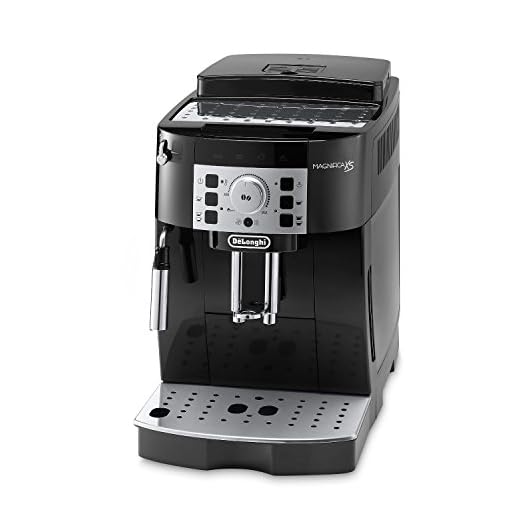
For those who want espresso before they are awake enough to operate a tamper, the De’Longhi Magnifica S is the most reliable super-automatic we tested. It houses a built-in steel burr grinder with 13 settings, moving beans from the hopper to the brew group with zero manual intervention. We set the dial to a finer grind, selected the double-shot button, and watched it deliver consistently balanced espresso in under a minute. The brew group is entirely removable. This makes cleaning incredibly simple compared to machines that require chemical backflushing. The 60-ounce water reservoir easily slides out from the front, a smart design choice for positioning under low cabinets.
Super-automatics rarely match the shot quality of a well-dialed semi-automatic. The crema is often a bit thinner, and the flavor profile is slightly muted. The Panarello steam wand also limits you to thick, bubbly cappuccino foam rather than latte art microfoam. However, for a one-touch workflow that requires virtually zero skill to operate, the Magnifica is an absolute workhorse.
6. Profitec Pro 500 PID
Best Premium Heat Exchange
La Pavoni Bar-Star 2V-R Commercial Espresso Machine
The Profitec Pro 500 is a German-engineered marvel designed for serious home baristas. It features a heat exchanger boiler, meaning you can pull espresso shots and steam milk at the exact same time. The 2-liter stainless steel boiler is powered by a 1400-watt element, providing endless steam pressure. During a stress test, we steamed four lattes back-to-back without the pressure dropping below 1 bar. The heavy E61 brew group acts as a massive heat sink, stabilizing the water temperature perfectly as it hits the puck. The hidden PID controller allows you to adjust the steam boiler temperature precisely.
At nearly $2,000, this is a significant investment. It takes about 20 minutes for that massive E61 group head to fully heat up, so a smart plug is highly recommended to turn it on before you wake up. If you regularly host dinner parties or have a household demanding multiple milk drinks quickly, the Pro 500’s build quality and simultaneous brewing and steaming capabilities are entirely justified.
7. Flair 58
Best Manual Lever
Flair PRO 3 Manual Lever Espresso Maker
The Flair 58 strips espresso down to its purest form. There is no water pump. Instead, you provide the 9 bars of pressure by physically pulling down the lever. This model features an electric preheat controller for the brew head. In our testing, this solved the biggest issue with manual machines: heat loss during extraction. Using a kettle, we poured 205°F water into the chamber and applied gentle pressure for a 5-second pre-infusion before pulling the full shot. The resulting espresso was incredibly sweet and complex. You have total control over the pressure profile, allowing you to taper off the pressure at the end of the shot to reduce bitterness.
It is not for everyone. You need a separate gooseneck kettle to heat your water, and there is absolutely no milk steaming capability. The workflow is hands-on and requires significant upper body force to hit standard espresso pressures. But if you are an espresso purist chasing the perfect shot and love the tactile feedback of a lever, the Flair 58 is unmatched for the price.
What to Look for in an Espresso Machine
Boiler Type Matters Heavily
Single boilers heat water for both brewing and steaming, but not at the same time. You pull a shot at 200°F, then wait 45 seconds for the boiler to reach 260°F for steam. Heat Exchanger and Dual Boiler machines solve this by allowing simultaneous brewing and steaming. If you only drink straight espresso, a single boiler or thermoblock is fine. If you make daily lattes for two or more people, a dual boiler or HX machine will cut your workflow time in half.
Portafilter Size Impacts Accessories
Commercial machines use 58mm portafilters. Brands like Gaggia, Rancilio, and Profitec stick to this standard. This matters because a 58mm size allows you to upgrade to precision baskets from brands like VST, or buy aftermarket tampers and distribution tools easily. Breville uses 54mm for most of its line, and cheaper machines often use 51mm. While 54mm can pull excellent shots, you will be slightly limited when shopping for third-party accessories down the road.
Temperature Stability and PID
Water temperature drastically affects extraction. Water that is too hot pulls out bitter, ashy flavors. Water that is too cold results in sour, under-extracted coffee. Older machines rely on mechanical thermostats that swing wildly in temperature. A PID controller is a digital algorithm that keeps the water temperature within one degree of your target. We strongly recommend buying a machine with a PID if you enjoy light-roast specialty coffees, as they require precise, higher temperatures to extract properly.
Grinder Dependency
An espresso machine is only as good as the grinder feeding it. Pressurized portafilters found on cheap machines can handle pre-ground coffee by artificially creating back-pressure. Unpressurized baskets require a dedicated espresso grinder that can make microscopic adjustments to the grind size. If you buy a premium espresso machine but use a cheap blade grinder or pre-ground beans, your coffee will taste terrible. Always budget at least $250 to $400 for a quality burr grinder.
Frequently Asked Questions
Our Verdict
The Breville Barista Express remains the best starting point for most kitchens. Grab fresh beans, invest in a good digital scale, and start practicing your puck prep. Great espresso takes patience, but the daily reward is entirely worth it.


