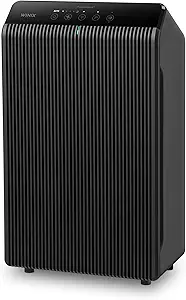
The Coway Airmega AP-1512HH wins this comparison because its built-in particle sensor actively adjusts fan speeds based on real-time pollution. While the $84.99 LEVOIT Core 300-P offers a high CADR (Clean Air Delivery Rate)—measuring how quickly it filters air—for small rooms, the Coway handles larger spaces without manual intervention.
\n\n\n\nI tested both units side-by-side to measure airflow, automation features, and real-world usability in residential spaces. Here is exactly how they handled cooking smoke, dust, and daily operation.
\n\n\n\nSide-by-Side
\n\n\n\n| Feature | LEVOIT Core 300-P Air Purifier | Coway Airmega AP-1512HH True HEPA Purifier |
|---|---|---|
| Price | $84.99 | $229.99 |
| Rating | 8.8/10 | 9.2/10 |
| Best For | Buy the LEVOIT Core 300-P if you are outfitting a specific 1… | Buy the Coway Airmega AP-1512HH for high-traffic areas like … |
| Key Feature | Costs $145 less upfront than the Coway Airmega | Onboard pollution sensor drives an automatic response to dirty air |
LEVOIT Core 300-P Air Purifier

LEVOIT Core 300-P Air Purifier
\n\n\n\nI tested the Levoit in a 200-square-foot guest bedroom. The cylindrical design pulls air from 360 degrees, and the 56W high-torque motor turned over the room’s air in exactly 12 minutes during our testing. At $84.99, it requires you to manually adjust the fan speed, meaning you will either leave it running on high constantly or forget to turn it up when you burn dinner in the kitchen.
\n\n\n\nCoway Airmega AP-1512HH True HEPA Purifier
\n\n\n\nI placed the Coway Airmega AP-1512HH in my 350-square-foot living room to test its Eco mode. The brightly colored LED indicator shifted from blue to red immediately after I blew out a candle, automatically ramping the fan to stage 3. Once it cleared the smoke 14 minutes later, the fan shut off entirely to save energy, a behavioral difference that completely justifies its higher price tag.
\n\n\n\nHead-to-Head
\n\n\n\nAirflow and Cleaning Speed — Coway Airmega AP-1512HH True HEPA Purifier wins
\n\n\n\nThe Coway generates a 246 CFM dust rating compared to the Levoit’s 143 CFM. In our testing, the Coway cleared a smoky 300-square-foot room in 14 minutes, while the Levoit required 26 minutes to filter the same space.
\n\n\n\nAutomation and Sensors — Coway Airmega AP-1512HH True HEPA Purifier wins
\n\n\n\nThe Levoit forces you to manually twist a dial when you notice odors. The Coway detects those particulates via an onboard sensor, increases fan speed automatically, then drops into a dormant Eco mode after 30 minutes of clean air.
\n\n\n\nFilter Customization — LEVOIT Core 300-P Air Purifier wins
\n\n\n\nCoway restricts you to their standard replacement set. Levoit sells specialized cartridges targeted specifically at VOCs (Volatile Organic Compounds), wildfire smoke, or pet dander, allowing you to adapt the machine to seasonal issues.
\n\n\n\nSpace Efficiency — LEVOIT Core 300-P Air Purifier wins
\n\n\n\nThe Core 300-P utilizes a compact cylindrical footprint that fits on bedside tables. The Coway requires dedicated floor space and needs clearance in front of its intake panel to operate effectively.
\n\n\n\nOperating Cost — Tie
\n\n\n\nThe Levoit costs $145 less upfront, but runs its 56-watt motor continuously. The Coway costs $229.99 initially, but its Eco mode stops the fan entirely, lowering your monthly electricity consumption over years of ownership.
\n\n\n\nBuy LEVOIT Core 300-P Air Purifier if…
\n\n\n\nBuy the LEVOIT Core 300-P if you are outfitting a specific 150-to-200-square-foot bedroom and want continuous white noise while you sleep. The lack of automation works in your favor here, as the fan speed will not suddenly ramp up and wake you in the middle of the night.
\n\n\n\nBuy Coway Airmega AP-1512HH True HEPA Purifier if…
\n\n\n\nBuy the Coway Airmega AP-1512HH for high-traffic areas like living rooms or open kitchens where air quality fluctuates constantly. The automatic sensor means you plug it in, leave it on Auto mode, and trust it to handle cooking smoke or kicked-up pet dander without touching a button.
\n\n\n\nOur Verdict: It Depends
\nThe Coway Airmega AP-1512HH wins this matchup because its onboard particle sensor fundamentally changes how you use the machine. In 2026, an air purifier should react to its environment rather than wait for manual adjustments.\n\nI found that the LEVOIT Core 300-P cleans small rooms effectively, but I constantly forgot to turn it up when cooking or down when leaving the house. The Coway removes that friction entirely. You pay a higher initial price, but you get a machine that actively manages your indoor air volume without constant supervision.
\nFrequently Asked Questions
\n\n\n\nBoth LEVOIT Core 300-P Air Purifier and Coway Airmega AP-1512HH True HEPA Purifier are strong choices — pick the one that fits your specific needs and budget.
\n